If you’re planning a triple radiator loop — say a 420mm up top, a 360mm in the front, and a 360mm at the bottom for a CPU and dual-GPU custom loop — you already know the hard part isn’t the plumbing. It’s the chassis. Most “full tower” cases quietly fall apart at this stage: the top radiator crowds into the motherboard VRM heatsinks, the front mount forces you to delete the drive cage, and the bottom radiator fights the power supply for every millimeter. A loop like this also implies serious hardware underneath it — a 350W+ CPU, one or two triple-slot GPUs, a 1200W-class PSU — so the case has to swallow all of that plus a reservoir, a pump, and enough fittings to make your wallet weep.
The good news is that a handful of full towers have genuinely caught up to what extreme water-cooling builders need in 2026: genuine 420mm support, removable radiator brackets, GPU clearance north of 400mm, and cable management that doesn’t turn the back panel into a pressure bomb. We looked at the full-tower field through one narrow lens — which cases can actually fit three radiators without compromise — and ranked the three that earn it. Here’s what we found.
As an Amazon Associate we earn from qualifying purchases at no extra cost to you.


Our Top Picks
 Thermaltake View 600 TG; Full Tower; 420mm Radiator22" x 9.8" x 23"23 x 9.8 x 22 inches32 poundsCheck on Amazon
Top 3 picks at a glance
Thermaltake View 600 TG; Full Tower; 420mm Radiator Support; 480mm GPU Clearance;...Check priceARCTIC Xtender Black (Tinted Glass) - PC Case, Tempered Panorama Glass, 2...Check price Cooler Master HAF 700 EVO PC Case - Full-Tower, E-ATX Compatible, 5...Check price
Quick Picks
| Product | Best for | Price |
|---|---|---|
| Thermaltake View 600 TG | Best overall for triple radiator loops | Check on Amazon |
| ARCTIC Xtender Black (Tinted Glass) | Best value with fans included | Check on Amazon |
| Cooler Master HAF 700 EVO | Best for showcase builds and tool-free maintenance | Check current price |
How We Compared
Our criteria were simple and unforgiving. First, a triple radiator loop case must support at least a 420mm radiator in one mount and 360mm in at least two others, without requiring you to sacrifice fans, drives, or the PSU. Second, GPU clearance had to handle modern flagship cards, which routinely run 330–360mm long and four slots thick. Third, we weighted cases with rotatable or removable radiator brackets and generous PSU clearance (200mm or more), because anyone who has bled a custom loop knows you will open this case dozens of times.
We also cared about build practicality: interior width for thick 45mm+ radiators with push-pull fans, hidden or pass-through cable routing for hardline bends, and enough radiator-to-motherboard clearance to avoid trimming VRM heatsinks. Every hard number below comes directly from the manufacturer.
The 3 Best Picks
1. Thermaltake View 600 TG — Best Overall for Triple Radiator Loops
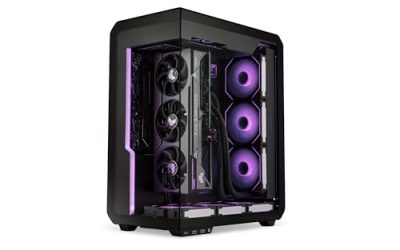
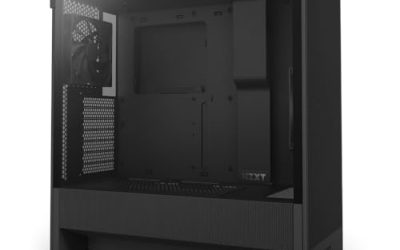
The View 600 TG is the case we’d hand to someone building a serious triple radiator loop on a single, coherent budget. It’s a full tower rated for a 420mm radiator, and it backs that up with 480mm of GPU clearance — enough for even oversized flagship cards with room for a distro plate or vertical mount later. The hidden connector support keeps the front panel clean for hardline runs, and rotatable PCIe slots make it far easier to get a vertically mounted GPU or a secondary slot device seated without disassembling your loop. With 220mm of PSU clearance, an ATX 3.0-class 1200W unit plus cabling fits without drama.
- Pros: True 420mm radiator support with 480mm GPU clearance for oversized cards
- Pros: 220mm PSU clearance and rotatable PCIe slots make maintenance and upgrades painless
- Con: Ships only in black, so bright-themed builds have fewer styling options
When to skip: If you want pre-installed fans out of the box or an included LCD display, look at the HAF 700 EVO instead — the View 600 assumes you’re supplying your own cooling hardware.
2. ARCTIC Xtender Black (Tinted Glass) — Best Value with Fans Included
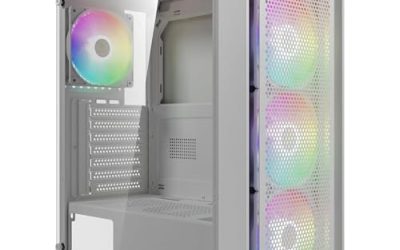
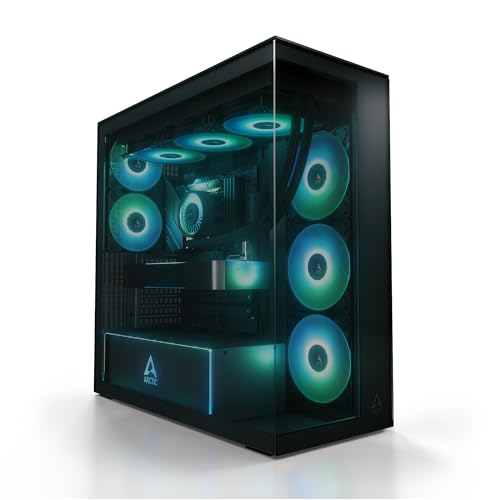
It’s a full big-tower chassis with tempered panorama tinted glass, E-ATX motherboard support, and dual 420mm radiator support — the defining spec for a loop builder, since a 420mm top mount paired with a second 420mm mount covers two of your three radiators outright. The tinted glass leans showcase rather than utility, so if your loop looks good, this case shows it off well. For builders who want maximum radiator capacity per dollar with cooling hardware already in the box, this is the easy call.
- Pros: Five pre-mounted A-RGB fans and panorama tinted glass included
- Con: Dual 420mm support means the third radiator mount is less flexible than on the View 600 or HAF 700 EVO
When to skip: If your loop plan is 420/360/360 rather than dual 420s, or if you need the deepest GPU clearance and modular brackets, spend up to the Thermaltake or Cooler Master.
3. Cooler Master HAF 700 EVO — Best for Showcase Builds and Tool-Free Maintenance
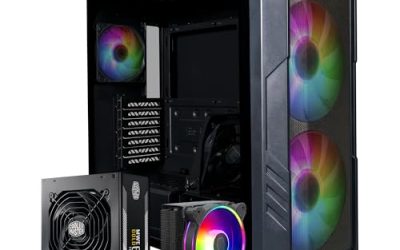
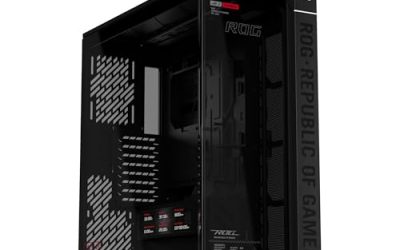
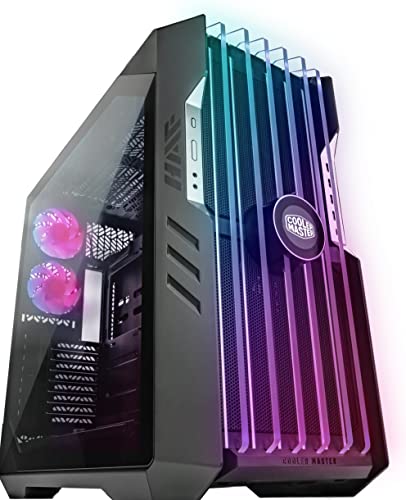
The HAF 700 EVO is Cooler Master’s statement full tower, and it’s aimed squarely at builders who want their loop on display and their maintenance sessions short. It’s E-ATX compatible with five pre-installed fans, so it breathes properly before you hang a single radiator on it. The rotatable radiator brackets are the headline feature for custom loop builders — they let you swing radiators out of the way while routing tubing or swapping components, which saves real time during fill, drain, and leak-test cycles. Add the LCD real-time display for live temperature and system readouts and ARGB edge-lit blades for the showcase factor, and it’s the most complete package here. Pricing varies by retailer, so check current listings before budgeting.
- Pros: Rotatable radiator brackets dramatically simplify loop maintenance and tubing routing
- Pros: LCD real-time display plus five pre-installed fans and ARGB edge-lit blades for a complete showcase build
- Con: No fixed MSRP listed here, and it’s the priciest option of the three once you find stock
When to skip: If you’re budget-constrained or you don’t care about the LCD and lighting theatrics, the View 600 TG delivers the core triple-radiator capability for less.
Buying Guide
Radiator Mounts and Clearance
Map your loop before you buy anything. A triple radiator loop typically means a 420mm top, a 360mm front, and a 360mm bottom — but check the case’s spec sheet for radiator thickness allowances, not just length. A 420mm radiator with 30mm thickness plus 25mm fans needs roughly 55mm of clearance on the motherboard side; push-pull configs can demand 85mm or more. Also confirm whether using the bottom radiator mount displaces the PSU shroud area or front drive cages. The Thermaltake and ARCTIC both publish dedicated multi-radiator support figures, which is the spec to trust over marketing terms like “water-cooling ready.”
GPU Clearance and Motherboard Support
Modern flagship GPUs run 320–360mm long and three to four slots thick, and if you’re water-cooling, you may add an active backplate that increases effective thickness further. Look for at least 400mm of GPU clearance — the View 600 TG’s 480mm figure means even a vertically mounted card with a riser cable has breathing room. For the board, E-ATX support matters: boards in the 272–305mm width range will overhang standard ATX standoff layouts, so the chassis needs the extra standoffs and width to match. Check that the top radiator won’t collide with tall VRM heatsinks or the I/O shroud on wide E-ATX boards.
Buildability: Brackets, PSU Room, and Cable Routing
You’ll service a custom loop far more often than a sealed air-cooled build, so optimize for maintenance. Rotatable or removable radiator brackets (a standout on the HAF 700 EVO) let you access motherboard screws without draining the loop. PSU clearance of 200mm+ — the View 600 TG offers 220mm — keeps a 1200–1600W PSU and its cabling from stealing radiator space. Finally, look for hidden or pass-through connector routing: it keeps the front of the case clean, protects hardline runs, and means you won’t be staring at a cable bundle through tinted panorama glass.
Our Verdict
For most triple radiator loop builders, the Thermaltake View 600 TGIf budget is the priority and you want fans in the box, the ARCTIC Xtender BlackAnd if the build is a showcase piece where maintenance convenience and live monitoring justify a higher spend, the Cooler Master HAF 700 EVO with its rotatable brackets, LCD display, and edge-lit ARGB blades is worth tracking down. All three can host a serious loop; choose based on whether you value price, included hardware, or modularity most.
FAQ
Can a full tower really fit three radiators at once?
Yes, but only models with explicit multi-radiator support. You need one mount rated for 420mm and two additional mounts for 360mm-class radiators, with no conflicts between radiators, the motherboard, GPU, and PSU. All three cases in this roundup publish multi-radiator support figures — the View 600 TG supports a 420mm radiator, and the Xtender supports dual 420mm mounts — so verify against your specific loop plan before buying.
How much PSU wattage do I need for a triple radiator loop?
Count the hardware, not the loop. A flagship CPU (250–350W), a water-cooled flagship GPU (350–450W), plus fans, pumps, and drives typically lands a recommended PSU in the 1000–1300W range, with 1200W being the common sweet spot for dual-GPU loops. Choose an ATX 3.0-class unit with native 12V-2×6 connectors, and make sure the case has the PSU clearance — 220mm, like the View 600 TG offers, accommodates most high-wattage models comfortably.
Do I need push or pull fans on thick radiators?
Push configuration is fine for most loops and keeps total radiator thickness around 55mm. Push-pull improves performance on thick (45mm+) radiators by roughly a few degrees under sustained load, but it doubles fan count and can exceed case clearance — especially on top mounts near the motherboard. Check the case’s thickness allowance before committing; some top mounts cap out at 30mm radiators plus 25mm fans.
Full tower vs. super tower — which do I actually need?
For a triple radiator loop, a full tower is enough if it publishes the right clearances — 420mm radiator support, 400mm+ GPU clearance, and E-ATX compatibility are the numbers that matter, not the case’s sheer size. Super towers add room for SSI-EEB boards and quad-SLI-era layouts most builders no longer need. Unless you’re running an extreme workstation platform, spend the savings from a well-designed full tower on better radiators and fittings instead.