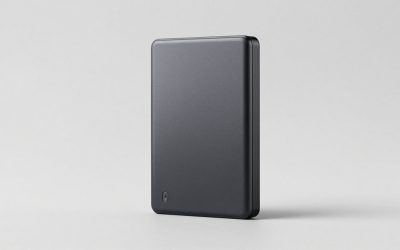
For a truly silent PC, the last mechanical noise source after you have tamed the CPU cooler and case fans is often the power supply. A fanless PSU removes that final spinning part entirely, cooling itself through a large finned heatsink and passive convection. It is a niche category, but for a bedroom rig, HTPC, or a build where absolute silence matters, nothing else quite compares.
As an Amazon Associate we earn from qualifying purchases at no extra cost to you.


Our Top Picks
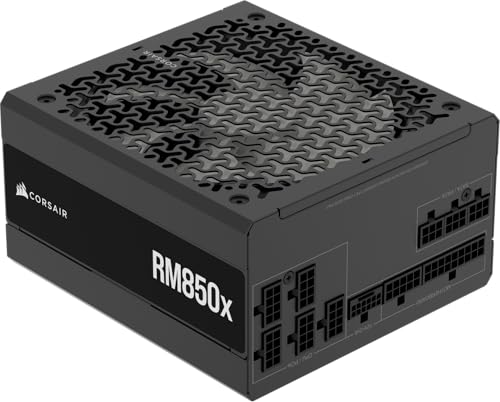


Top 3 picks at a glance
What makes a fanless PSU work
A passive power supply has no fan at all. Instead it uses oversized aluminum heatsinks bonded to the internal components and relies on airflow rising naturally through vents. Because it cannot force air over hot parts, it must run at very high efficiency, usually 80 Plus Platinum or Titanium, so that less waste heat is produced in the first place.
Why efficiency is non-negotiable
At 90–94% efficiency a 500W load wastes only 30–55W as heat, which a big heatsink can shed passively. Drop to 85% and that waste climbs past 75W, more than passive cooling can handle safely. This is why every serious fanless unit is Platinum or Titanium rated; the efficiency is not a luxury, it is a requirement for going fanless at all.
| Spec to look for | Target | Why it matters |
|---|---|---|
| Efficiency | Platinum / Titanium | Less waste heat to dissipate |
| Wattage | 500–700W | Runs at efficient partial load |
| Load headroom | 50%+ spare | Keeps heatsink cool |
| Case airflow | Ventilated top | Passive convection needs a path |
| Warranty | 10–12 years | Signals premium internals |
How to choose the right one
Size it for partial load
Fanless units cool best when they are not stressed, so buy more wattage than a comparable fan unit. A build that draws 350–400W is ideal on a 600–700W passive PSU, keeping it in the 50–65% load band where heat stays modest and efficiency peaks. Running a fanless 500W near its limit is exactly where passive cooling struggles.
Mind your case and orientation
Passive convection needs somewhere for hot air to go. Mount the PSU so its vents are not smothered against a solid basement floor with zero airflow, and pick a case with a ventilated PSU shroud or a gentle intake nearby. In a well-ventilated case the heatsink stays comfortably warm; in a sealed, cramped one it can climb higher than you want.
Consider a hybrid as a backstop
If a full fanless unit feels risky for your case, a high-quality Platinum unit with a zero-RPM (semi-passive) fan mode is a strong compromise. It stays completely silent under everyday and gaming loads, spinning its fan only during rare heavy stress. For many “silent” builds this delivers the same real-world quiet with more thermal safety margin.
Practical expectations
In return you get a PSU that is dead silent forever, with no fan to age, rattle, or fail. Paired with a large air cooler in zero-RPM territory and quiet 140mm case fans, a fanless PSU is the final piece of a genuinely inaudible PC.
FAQ
Are fanless power supplies reliable long term?
Yes, and often more so than fan units, because they remove the one moving part that wears out. Their premium internals and 10–12 year warranties reflect that. The key is giving them adequate wattage headroom and a ventilated case so the heatsink never overheats.
Can a fanless PSU handle a gaming GPU?
It can, as long as you size it correctly. A 700W passive unit comfortably powers a 350–450W gaming build with headroom to spare. What you should avoid is pairing a flagship 450W+ GPU with a small fanless unit run near its limit, where passive cooling has the least margin.
Bottom line
The best fanless power supply for a silent build is a Platinum or Titanium 600–700W unit run at partial load in a ventilated case, giving you permanent silence with no moving parts to fail. If a full passive unit feels like too much, a zero-RPM semi-passive PSU gets you nearly the same quiet with extra safety margin.