Our Top Picks
 Breville BCG820BTR Smart Grinder Pro for Kitchens18 oz Coffee Bean Capacity6.28 x 8.46 x 15.33 inches6.39 poundsCheck on Amazon

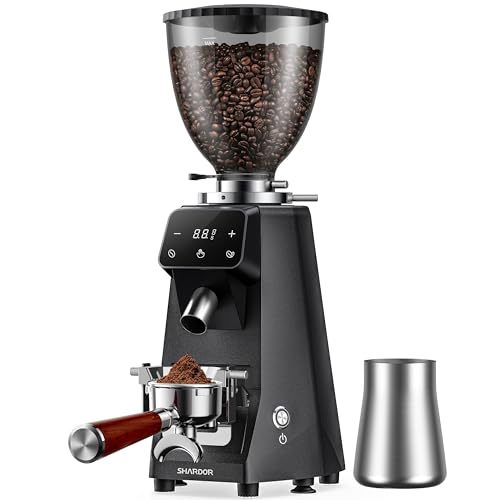
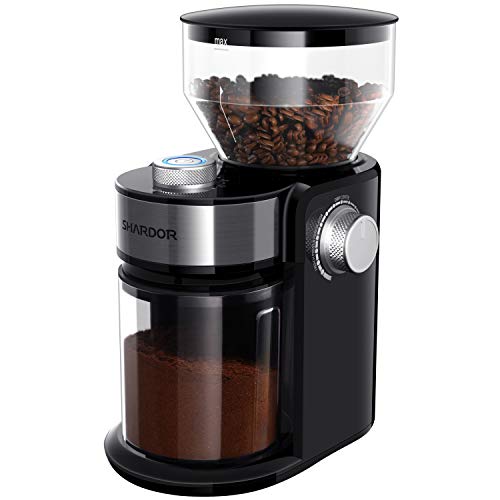
Top 3 picks at a glance

Best Espresso Grinders With Dosing for Home Cafés
The best espresso grinders with dosing for home cafs are the Eureka Mignon Libra for repeatable grind-by-weight dosing, the Baratza Sette 270Wi for fast and precise single-dose weighing, and the DF64 Gen 2 for value, low retention, and strong burr-upgrade flexibility.
For a home espresso setup, “dosing” can mean three different things: a timed dose from a hopper, grinding directly by weight, or single-dosing beans into an empty chamber. These approaches produce different workflows. A grinder that doses 18 grams accurately but retains several grams of old coffee may be less consistent from one coffee to the next than a grinder with a slightly less advanced timer and near-zero retention.
As an Amazon Associate we earn from qualifying purchases at no extra cost to you.


Quick comparison
| Grinder | Dosing method | Best use | Typical retention | Hopper capacity | Noise and speed | General price range |
|---|---|---|---|---|---|---|
| Eureka Mignon Libra | Grind by weight | Repeatable daily espresso | Low, usually under 1 g with normal purging | About 300 g | Moderate noise; roughly 2.5–3.5 g/s for espresso | Varies |
| Baratza Sette 270Wi | Grind by weight | Fast, direct-to-portafilter dosing | Very low, often around 0.3–0.5 g | About 300 g | Loud but very fast; about 3.5–5 g/s | Varies |
| DF64 Gen 2 | Timer or single dose | Low-retention value setup | Often below 0.2–0.5 g after seasoning | About 50–60 g single-dose hopper | Moderate noise; roughly 2–3 g/s for espresso | Varies |
| Eureka Mignon Specialita | Timed hopper dosing | Quiet traditional workflow | Low, but some coffee remains in the chute | About 300 g | Relatively quiet; roughly 1.5–2.5 g/s | Varies |
| Niche Zero | Single dose | Switching beans and simple workflow | Usually very low, commonly under 0.2 g | About 30–40 g dosing cup | Moderate noise; around 1–2 g/s | Varies |
Best overall: Eureka Mignon Libra
The Eureka Mignon Libra is the strongest all-round choice when dosing consistency matters more than the lowest purchase price. Its integrated scale allows you to set a target dose and grind directly into the portafilter, reducing the need to weigh every dose separately. That is useful for households where several people make espresso or where the grinder remains loaded with the same beans for days.
Its main advantage is workflow repeatability. A timed grinder assumes that the motor delivers the same amount of coffee per second every time. In practice, bean density, roast level, humidity, and grind fineness change the flow rate. Grind-by-weight dosing compensates for those changes. The Libra is also quieter and more conventional in operation than the Sette 270Wi.
The trade-off is that grind-by-weight systems are more sensitive to how the portafilter or dosing cup sits on the scale. Keep the fork clean, place the portafilter in the same position each time, and avoid touching it while the grinder is running. If the display regularly overshoots, recalibrate the scale and check that the portafilter is not catching on the chute.
Best for speed: Baratza Sette 270Wi
The Baratza Sette 270Wi is an excellent choice when a fast morning workflow is more important than acoustic comfort. Its conical burr design and open grinding path produce very little retained coffee, while the built-in weighing system can stop close to the programmed dose. It is particularly convenient for a 17–20 gram espresso recipe prepared directly into a portafilter.
The Sette’s 30 macro and micro adjustment positions provide a broad espresso range, although its adjustment feel is less refined than the stepless dial on many Eureka grinders. The stepped macro system makes it easy to return to a previous setting, while the micro adjustment allows the smaller changes needed for espresso dialing-in.
Expect substantially more noise than from the Eureka Mignon range. In a small apartment, that difference can matter more than a few seconds saved. The Sette also has a more plastic-heavy construction and a distinctive gear-driven sound, so it is best for buyers who prioritize speed, low retention, and weighing over premium quietness.
Best value and flexibility: DF64 Gen 2
The DF64 Gen 2 is a compelling option for home baristas who are willing to weigh beans before grinding. It uses 64 mm flat burrs, has a stepless grind adjustment, and is commonly sold with anti-static and declumper improvements compared with earlier versions. Its single-dose design makes it practical to rotate between light, medium, and dark roasts without keeping a large hopper full.
It does not provide the same built-in grind-by-weight convenience as the Libra or Sette. Instead, you place a measured dose in the hopper, run the grinder, and use a bellows or brief purge to clear the exit path. That extra action is the price of low retention and bean flexibility.
For espresso, begin with 18 grams of beans and a medium-fine setting. Record the dial position, shot time, beverage mass, and taste. Change only one variable at a time: move finer if the shot is fast and sour, or coarser if it is slow and bitter. Because the dial is stepless, even a small movement can have a noticeable effect.
Best quiet hopper grinder: Eureka Mignon Specialita
The Eureka Mignon Specialita remains a strong choice for a traditional hopper workflow. Its stepless adjustment is well suited to espresso, and its sound profile is usually more neighbor-friendly than high-speed gear-driven grinders. The touchscreen timer supports repeatable doses once you have calibrated the time for your coffee.
Timed dosing is reliable only when the beans and grind setting remain reasonably stable. Start by weighing ten consecutive doses. If the target is 18 grams, add the results and divide by ten. For example, doses of 17.8, 18.1, 18.0, 17.9, 18.2, 18.0, 17.7, 18.1, 18.0, and 17.9 grams total 179.7 grams, giving an average of 17.97 grams. That is excellent consistency, but the individual spread is still about 0.5 gram. If your recipe is sensitive to dose changes, grind by weight instead.
Best for changing beans: Niche Zero
The Niche Zero is not a timed or grind-by-weight hopper grinder, but its single-dose workflow is among the simplest for switching coffees. You weigh each dose, load the beans, grind, and use the integrated dosing cup to transfer the grounds. Its low-retention design reduces the stale coffee left between different beans.
Its adjustment system is easy to use, and the large dial makes small espresso changes understandable rather than fiddly. The trade-off is slower preparation than a hopper grinder and the need to weigh beans before every shot. It also uses conical burrs, which produce a different balance of body and clarity from the flat-burr DF64 Gen 2.
Choose by workflow, not just burr size
| Your situation | Best fit | Why | What to accept |
|---|---|---|---|
| Same beans, several shots every day | Eureka Mignon Libra | Weight-based dosing minimizes timer drift | Higher cost and a scale-sensitive workflow |
| Fastest direct-to-portafilter routine | Baratza Sette 270Wi | Very low retention and rapid grind-by-weight dosing | High noise and less premium construction |
| Two or more coffees in rotation | DF64 Gen 2 or Niche Zero | Single dosing limits cross-contamination | Beans must be weighed each time |
| Apartment or early-morning use | Eureka Mignon Specialita | Quieter motor and enclosed traditional design | Timer must be recalibrated for different beans |
| Want future burr experimentation | DF64 Gen 2 | 64 mm flat-burr platform offers upgrade options | More hands-on cleaning and single-dose steps |
How much hopper capacity do you actually need?
Hopper size is less important than it looks. An 18 gram espresso dose used twice daily consumes only 36 grams. A 300 gram hopper therefore holds more than eight days of coffee, but storing beans in the hopper for that long can reduce freshness, especially with light roasts. For most home cafés, a 40–60 gram single-dose hopper is enough for one or two drinks while preserving the option to change beans.
A large hopper makes sense when convenience is the priority and one coffee is used continuously. A small hopper or bellows setup is better when you buy several coffees, use decaf occasionally, or want to control exactly how much coffee enters the grinder.
Retention, noise, and adjustment: the overlooked trade-offs
- Retention: Ask how much coffee remains after the chute and burr chamber settle, not only how much stays visibly in the hopper. A grinder retaining 0.5 gram can shift a 18 gram recipe by nearly 3% if the retained coffee is stale or from another roast.
- Adjustment: Stepless adjustment is helpful for dialing in small changes, while stepped adjustment makes repeatable return points easier. Neither is automatically superior.
- Noise: Fast grinders often sound louder because the motor and burrs move more aggressively. If the grinder runs for five seconds instead of ten, the total disturbance may still be lower, but the peak volume can be more noticeable.
- Workflow: Grind-by-weight removes a weighing step but adds a scale that must remain accurate. Single dosing minimizes retention but requires pre-weighing beans.
Simple setup procedure for consistent dosing
- Choose a target, such as 18 grams in and 36 grams out.
- Keep the same basket, portafilter, and dosing position while calibrating the grinder.
- For a timed grinder, weigh at least ten doses and adjust the timer using the average rather than one unusually large or small dose.
- For a grind-by-weight grinder, confirm the scale with a known kitchen weight and keep the support surfaces free of coffee grounds.
- After changing beans, purge enough coffee to clear the previous grind. A small purge is usually preferable to assuming the first dose is uncontaminated.
- Record the grind setting and dose. If the shot changes, determine whether the cause is dose, grind size, distribution, or puck preparation before changing multiple settings.
For most buyers, choose the Eureka Mignon Libra when convenience and dose repeatability come first, the Baratza Sette 270Wi when speed and low retention matter most, and the DF64 Gen 2 or Niche Zero when switching beans is part of the daily ritual. The right grinder is the one whose dosing method you will use consistently—not simply the model with the largest burrs or hopper.
Frequently asked questions
What does grind-by-weight dosing mean on an espresso grinder?
Grind-by-weight dosing means the grinder measures the coffee as it grinds and stops when it reaches a programmed target dose. This can compensate for changes in bean density, roast level, humidity, and grind fineness that affect flow rate. The Eureka Mignon Libra and Baratza Sette 270Wi use this approach, while timed grinders depend more on a consistent amount of coffee per second.
Should I use a portafilter or dosing cup with these grinders?
Use a portafilter when you want to grind directly into it, as with the Eureka Mignon Libra or Baratza Sette 270Wi. A dosing cup is useful with the Niche Zero, whose single-dose workflow includes an integrated dosing cup for transferring grounds. With a weight-based grinder, keep the portafilter or cup positioned consistently and avoid touching it while grinding.
How should I calibrate a timed dose on the Eureka Mignon Specialita?
Weigh ten consecutive doses and calculate their average by adding the results and dividing by ten. For an 18-gram target, the article’s example totals 179.7 grams, producing an average of 17.97 grams. This indicates excellent consistency, although the individual doses still vary by about 0.5 gram. Recalibrate the timer when the beans or grind setting change.
Which grinder is easiest to use when I switch between light, medium, and dark roasts?
The DF64 Gen 2 is designed for switching between light, medium, and dark roasts because its single-dose workflow avoids keeping a large hopper full. The Niche Zero is also practical for changing coffees because you weigh each dose and its low-retention design reduces stale coffee between beans. Both require weighing beans before grinding rather than relying on a hopper timer.
What should I change if my espresso shot is sour or bitter?
If the shot is fast and sour, move the DF64 Gen 2 finer. If it is slow and bitter, move coarser. Record the dial position, shot time, beverage mass, and taste, and change only one variable at a time. The DF64’s adjustment is stepless, so even a small movement can noticeably affect espresso extraction.