
Small form factor builds force hard cooling decisions because space is measured in millimeters. Choosing between a low-profile air cooler and a compact all-in-one liquid cooler in a tiny ITX case is not the same calculation as in a roomy tower. Clearance, layout, and noise all behave differently when the case is the size of a lunchbox.
As an Amazon Associate we earn from qualifying purchases at no extra cost to you.
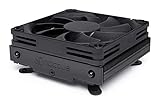


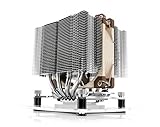
Our Top Picks

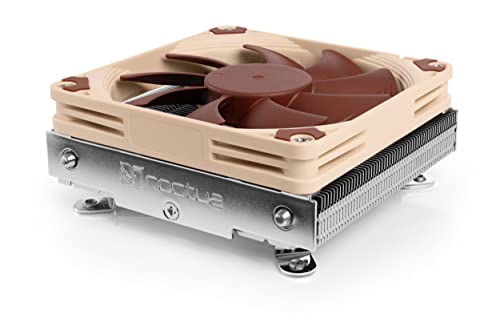

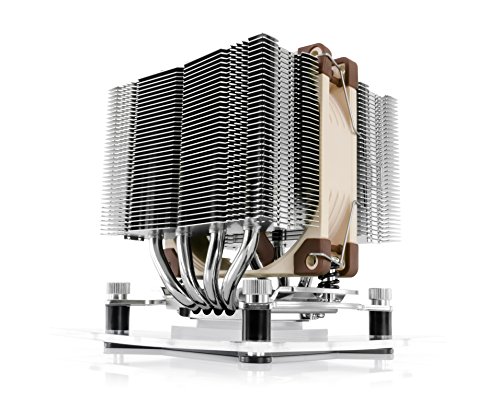
Top 3 picks at a glance
The clearance problem drives everything
In SFF, the case dictates what fits. Many compact cases impose a strict CPU cooler height limit, sometimes as low as 45-70mm, which rules out big tower air coolers entirely and demands a low-profile heatsink. Other SFF cases include a radiator mount, often 240mm, that a slim air cooler cannot use. The first question is not which cools better in theory, but which physically fits your specific case and its cooler-height or radiator-support spec.
| Case type | Typical fit | Best cooler |
|---|---|---|
| Ultra-compact (sub-70mm CPU clearance) | Low-profile only | Low-profile air |
| Sandwich ITX with radiator mount | 240mm AIO or slim air | AIO often better |
| Small tower ITX | Mid tower air or AIO | Either |
How each performs in tight spaces
A low-profile air cooler is simple, reliable, and has no pump to fail, but its small heatsink and short fan limit how much heat it can handle, so it suits lower-power CPUs or modest sustained loads. A compact AIO moves heat away from the cramped CPU area to a radiator mounted on a case panel, which can cool a hotter chip better and pull that heat straight out of the case. In a sealed SFF box, relocating heat to an exhaust radiator is a genuine advantage.
The heat-in-a-box factor
SFF cases have little internal volume, so heat builds up fast. An air cooler dumps its heat into that tiny volume, where the GPU also lives, and it all has to escape through limited venting. An AIO radiator mounted as exhaust ejects CPU heat directly outside, easing the internal thermal load. This is why higher-power SFF builds often favor a 240mm AIO when the case supports one.
Noise, reliability, and simplicity
| Factor | Low-profile air | Compact AIO |
|---|---|---|
| Fits tightest cases | Yes | Only radiator-ready cases |
| Cools high-power CPU | Limited | Better |
| Pump failure risk | None | Small, exists |
| Noise under load | Small fan can whine | Radiator fans quieter per watt |
| Install complexity | Simple | More cables and mounting |
Air wins on simplicity and reliability with no pump and fewer parts, ideal for low-power or budget SFF. AIO wins on raw capacity and heat evacuation for hot chips, at the cost of a pump that can eventually fail and a more involved install. In the tiniest cases air is often the only option; in sandwich-layout cases with a radiator mount the AIO usually pulls ahead.
FAQ
Can a low-profile air cooler handle a high-end CPU in SFF?
It can keep it running, but a small heatsink will let a high-power CPU run hot and throttle under sustained heavy loads. For gaming with a mid-power chip it is often fine; for a hot, high-core CPU under long full loads, a 240mm AIO is the safer performer if the case supports it.
Are AIOs reliable enough for a compact build?
Quality AIOs are reliable and commonly last many years, but they do contain a pump that will eventually wear out, unlike an air cooler. In a hard-to-service SFF case, weigh that against the better cooling. Many builders accept the small risk for the performance gain in hot SFF systems.
Matching the cooler to your CPU and use
Beyond fit, match the cooler to how hard you actually push the chip. A modest CPU used mainly for gaming produces bursty, moderate heat that a good low-profile air cooler handles quietly, making air the simpler, more reliable pick. A high-core CPU under sustained all-core loads like rendering or heavy multitasking generates continuous heat that a small heatsink cannot shed, so a 240mm AIO’s larger radiator surface keeps it from throttling. When in doubt in SFF, undervolt the CPU first; the reduced heat can turn a marginal air-cooling situation into a comfortable one and buy you quieter fans either way.
Bottom line
In small form factor, the case decides first: check your cooler-height limit and radiator support before anything else. Low-profile air is the simple, reliable, sometimes only choice for the tightest cases and cooler CPUs. A compact 240mm AIO cools hotter chips better and ejects heat out of the cramped box, making it the stronger pick for high-power SFF builds in radiator-ready cases.









