Overclocking is a game of heat management: the cooler your CPU stays, the higher the clocks and voltages it can hold before it throttles. That puts the air-versus-liquid debate in a different light than everyday builds. When you are chasing every last megahertz, the question is not just which cooler runs cooler on average, but which gives you more sustained thermal headroom under a punishing, prolonged load.
As an Amazon Associate we earn from qualifying purchases at no extra cost to you.
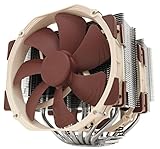

Our Top Picks
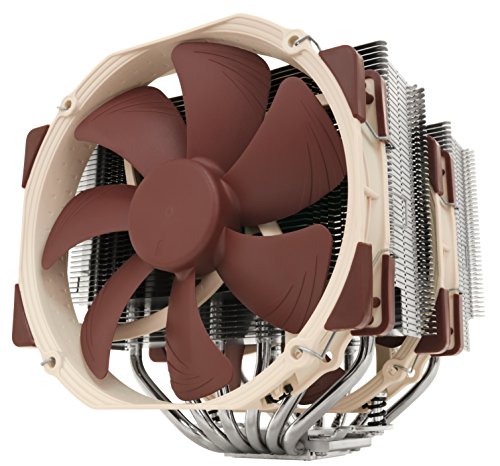


Top 3 picks at a glance
What overclocking demands from a cooler
An overclock raises power draw sharply because voltage and frequency both climb. A chip that sips 150W at stock can pull well past 250W once tuned, and that heat has to leave the die continuously. The cooler’s job is to reject that heat fast enough to keep the CPU below its throttle point during long stress tests, renders, or benchmark runs — not just for a few seconds.
Where a big AIO pulls ahead
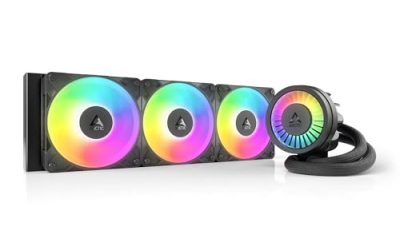
A 360mm AIO has far more radiator surface area than even a large air cooler, and it moves heat away from the socket to fans that breathe outside air. Under a sustained heavy overclock, that surface area lets it hold a lower steady-state temperature, which translates directly into more stable clocks and a bit more tuning room. For high-wattage overclocks on hot flagship chips, liquid generally offers the most headroom.
| Scenario | Air cooler | 360mm AIO |
|---|---|---|
| Mild overclock, ~180W | Excellent, quiet | Excellent, minor edge |
| Aggressive OC, 250W+ | Good but nearer limits | Best sustained headroom |
| Long all-core stress runs | Warms up over time | Holds temps longer |
| Noise at matched temps | Often quieter | Pump adds some noise |
Why air cooling still competes
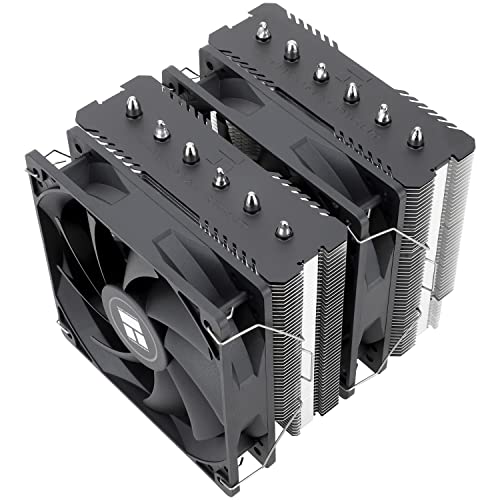
A premium dual-tower air cooler is closer to a mid-size AIO than many expect. For mild to moderate overclocks it delivers plenty of headroom, often at lower noise because there is no pump. It has no pump to fail, needs no maintenance, and cannot leak. If your overclock is modest — a small all-core bump rather than a voltage-maxed record attempt — a top air cooler may match a 240–280mm AIO and undercut it on noise and reliability.
The transient and noise trade-off
Air coolers respond quickly to short spikes because the heatsink mass absorbs bursts, while a large water loop has more thermal inertia that smooths sustained loads. At matched temperatures, a good air cooler often runs quieter because it avoids pump whine, though radiator fans on a big AIO can spin slower for the same cooling. Weigh which noise source bothers you more.
Practical guidance
For record-chasing overclocks on a hot high-end CPU, a 360mm AIO gives the most sustained headroom and is the safer bet for holding clocks through long runs. For everyday overclocking on mainstream chips, a premium air cooler delivers most of the benefit with less to go wrong. Either way, case airflow, thermal paste quality, and mounting pressure influence results as much as the cooler class, so do not neglect them.
Frequently asked questions
Can an air cooler handle an overclocked flagship CPU?
A top dual-tower air cooler can handle a moderate overclock on a flagship chip, but at very high wattages it reaches its limits sooner than a 360mm AIO. If you are pushing aggressive voltages during long all-core loads, liquid gives more sustained room before throttling.
Is a 240mm AIO better than a premium air cooler for overclocking?
Not necessarily. A high-end dual-tower air cooler often matches or beats a 240mm AIO under sustained load and runs quieter without pump noise. The clear liquid advantage appears at 360mm, where radiator area outpaces what any air cooler can offer.
Bottom line
For serious overclocking headroom on a hot, high-wattage CPU, a 360mm AIO is the stronger choice thanks to its radiator surface and sustained cooling. For mild to moderate overclocks, a premium air cooler competes closely, wins on reliability, and often runs quieter. Match the cooler to how hard you actually push, and remember airflow and mounting matter just as much as the badge on the box.