Our Top Picks
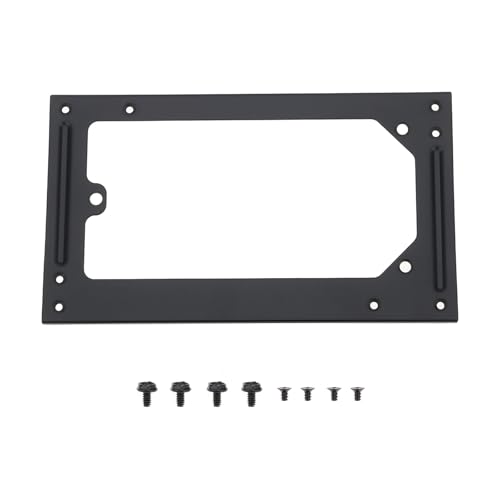
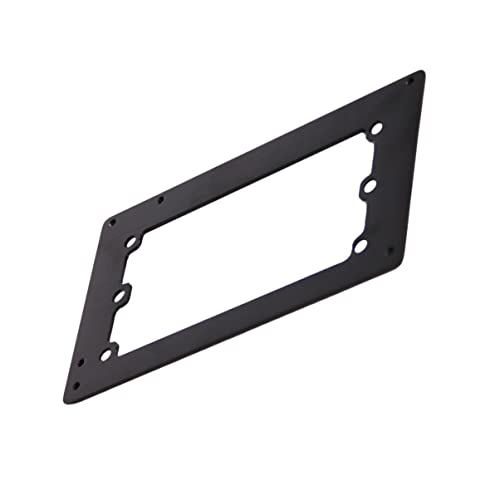 Mobestech PSU Mounting Bracket to ATX Power Supply13.8X6.5X0.155.9 x 3.34 x 0.05 inches0.07 PoundsCheck on Amazon


Top 3 picks at a glance
The Short Answer
An SFX power supply measures 4.92 x 2.5 x 3.15 inches (125 x 63.5 x 80 mm), while a standard ATX power supply measures 5.91 x 3.39 x 5.51 inches (150 x 86 x 140 mm). If your case was built for SFX, an ATX unit will not fit unless the case explicitly supports both formats.
The practical rule: buy the format your case specifies. When a case supports both — as many compact ATX and Mini-ITX chassis do — SFX frees up space for longer graphics cards and better airflow, while ATX gives you more wattage per dollar and quieter operation at low loads because the fan is larger.
As an Amazon Associate we earn from qualifying purchases at no extra cost to you.



Standard Sizes
| Format | Width | Height (Depth into case) | Length | Typical Wattage | Common Use |
|---|---|---|---|---|---|
| SFX | 4.92 in / 125 mm | 2.50 in / 63.5 mm | 3.15 in / 80 mm | 450–800 W | Mini-ITX builds, small form factor cases |
| SFX-L | 4.92 in / 125 mm | 2.50 in / 63.5 mm | 3.94 in / 100 mm | 550–850 W | SFF cases with extra PSU depth clearance |
| ATX | 5.91 in / 150 mm | 3.39 in / 86 mm | 5.51 in / 140 mm | 450–1600 W | Mid-tower and full-tower desktop builds |
| TFX | 3.35 in / 85 mm | 2.52 in / 64 mm | 13.58 in / 345 mm | 300–500 W | Slim HTPC and low-profile cases |
| Flex ATX | 3.07 in / 81.5 mm | 1.59 in / 40.5 mm | 5.91 in / 150 mm | 300–600 W | Ultra-compact server-style builds |
Mounting hole patterns differ too. SFX uses a screw spacing of about 2.36 inches (60 mm) across its face, while ATX uses roughly 2.76 inches (70 mm) between the upper screws on its wider face.
How to Measure Your Space
- Shut down and unplug the PC. Hold the power button for five seconds after unplugging to drain residual charge.
- Measure the PSU bay length. With the side panel off, measure from the rear PSU mounting flange forward to the first obstruction (drive cage, cable shroud, or case floor). That number in inches is the maximum PSU depth you can use.
- Measure the bay height and width. Standard ATX bays are roughly 3.4 inches (86 mm) tall and 5.9 inches (150 mm) wide. SFX bays are about 2.5 inches (63.5 mm) tall. If the bay opening is only 2.5 inches tall, a full ATX unit physically cannot slide in.
- Check for dual-format mounting holes. Look for two sets of screw holes on the rear panel — many modern compact cases ship with both SFX and ATX hole patterns plus interchangeable brackets.
- Account for cable clearance. Leave at least 1 inch (25 mm) beyond the PSU’s rear face for cable routing and connectors. Non-modular PSUs also need a spot for the permanently attached cable bundle.
- Check GPU interference. In SFX-equipped compact builds, a longer PSU (SFX-L at 3.94 inches) can crowd graphics cards rated longer than 12 inches. Measure the gap between the PSU front and your GPU’s end.
By Room or Use Case
Compact Desk and Living Room Builds (Mini-ITX)
Small form factor cases almost always require SFX. Because the fan is smaller (usually 80–92 mm), pick a model with a semi-passive mode so the fan stays off at idle. Keep total depth under 3.15 inches unless your case lists SFX-L support. Expect to pay a 20–40% premium over an equivalent-wattage ATX unit — that is the cost of miniaturization.
Standard Mid-Tower Gaming Builds
A full ATX power supply is the default here. A 140 mm-deep ATX unit fits virtually every mid-tower; only step down to a shorter 120 mm-deep model if your case shares the bay with a drive cage.
Budget and Office Builds
If you are upgrading an older SFX-based slim case rather than replacing it, a converter bracket lets you reuse a standard ATX supply only if the case physically accepts one — the bracket solves hole spacing, not interior volume.
High-End and Enthusiast Systems
Systems drawing 500 W or more at the wall benefit from ATX units in the 850–1200 W class. At these wattages the ATX format’s larger heatsinks and fan provide meaningfully better thermal headroom. Running an SFX unit at 80%+ of its rated load continuously tends to mean more fan noise than an equivalent ATX unit under the same load.
SFF Conversions and Bracket Workarounds
If you have an SFX case but only an ATX power supply, a conversion frame such as the Mobestech ATX adapter bracket (5.90 x 3.34 x 0.05 inches) or the LT Easiyl SFX-to-ATX plate can mount an ATX unit externally or reposition it — but verify your specific case supports this.
Common Sizing Mistakes
- Assuming depth is universal. ATX specifies a 5.51-inch (140 mm) minimum length, but many units run 6.3–7.9 inches (160–200 mm). Always match PSU depth to your measured bay, not the standard.
- Ignoring SFX-L depth. SFX-L adds 0.79 inches (20 mm) of length. It fits only cases that explicitly list clearance for it.
- Buying a bracket to solve a volume problem. An adapter plate fixes screw-hole spacing only. If your case bay is 2.5 inches tall, no bracket makes a 3.39-inch-tall ATX unit fit.
- Overbuying wattage. A 1600 W unit in a 300 W system runs its fan less efficiently and wastes money. Size for roughly 50–70% of rated load under peak system draw.
- Forgetting cable clearance on non-modular units. A fixed cable bundle can add 2–3 inches of needed space in front of the PSU.
- Skipping the modular-swap check. SFX and ATX units use compatible modular cable sets only within the same brand and series — never interchange cables between different PSUs.
FAQ
Can I put an SFX power supply in an ATX case?
Yes. Some cases include a convertible bracket in the box, so check your accessories before buying.
Can I put an ATX power supply in an SFX case?
Usually no. An ATX unit is about 0.89 inches (22.5 mm) taller and 2.36 inches (60 mm) longer than SFX, so most SFX-only cases lack the interior volume. Only cases marketed as SFX/ATX dual-compatible with both rear hole patterns will take either format.
How do I know which format my case needs?
Check the case specification sheet for “PSU support” — it will read SFX, ATX, SFX-L, or a combination. If the documentation is lost, measure the rear mounting cutout: a 2.5-inch-tall opening indicates SFX, while a 3.4-inch-tall opening indicates ATX.
Do SFX power supplies cost more than ATX?
Yes, generally 20–40% more for the same wattage and efficiency tier. Prices have narrowed going into 2026 as compact builds grow more popular, but the premium remains standard.