The best snowboards for beginners and all-mountain riders are forgiving, medium-flex boards with a stable profile—typically a rocker-camber or flat-to-rocker design for new riders, and camber-dominant all-mountain boards for riders who already link turns confidently.
As an Amazon Associate we earn from qualifying purchases at no extra cost to you.


Our Top Picks


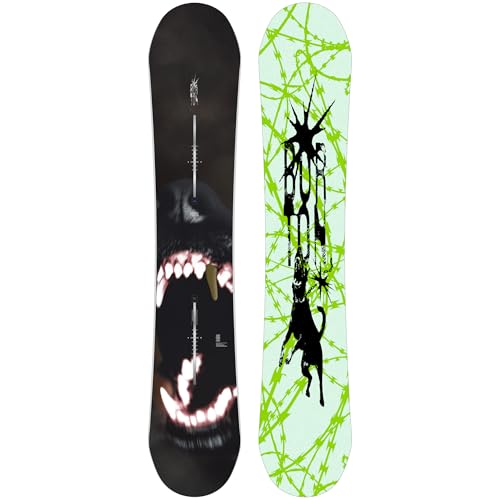
Top 3 picks at a glance
Quick picks by riding goal
| Rider or terrain | Board examples | Profile and shape to look for | Why it works |
|---|---|---|---|
| First snowboard | Burton Ripcord, K2 Raygun Pop, Ride Agenda | Flat-to-rocker or mild rocker-camber; directional twin; soft to medium flex | Turns easily and is less punishing when balance or edge control is inconsistent |
| Beginner who wants one board | Yes Basic, GNU GWO, Salomon Assassin | Camber between the feet with rocker near the contact points; true or directional twin | Adds grip and progression potential without feeling excessively aggressive |
| All-mountain intermediate rider | Burton Custom, Jones Mountain Twin, Ride Algorythm | Camber-dominant; directional twin or mild directional shape; medium flex | Balances carving, variable snow, jumps, and occasional powder |
| Park and freestyle | Burton Process, Capita Ultrafear, Lib Tech Skate Banana | True twin; soft or medium flex; traditional, hybrid, or reverse camber | Supports switch riding, presses, spins, and rails |
| Powder-focused all-mountain riding | Jones Frontier, Burton Skeleton Key, Lib Tech Orca | Directional shape; setback stance; rocker in the nose; medium to stiff flex | Keeps the nose afloat and remains controlled in deeper or uneven snow |
Model availability, flex ratings, and sizes can change by season, so use these names as useful examples rather than treating a model name as a guarantee of one exact specification. The board’s profile, flex, width, and size matter more than the logo.
Choose the profile before choosing the model
Traditional camber
Traditional camber arches upward between the bindings and presses the contact points into the snow when weighted. It gives strong edge hold, energy out of turns, and stability at speed. The trade-off is that it demands better balance and can catch an edge more abruptly when a beginner rides flat or leans incorrectly.
Choose traditional camber if you already link turns reliably, want to carve groomed runs, or prioritize jump takeoffs and firm-snow control. A medium-flex camber board is usually more versatile than a very stiff one.
Rocker or reverse camber
Rocker curves upward toward the nose and tail. It is maneuverable at low speed and less likely to catch an edge, which makes it attractive for first-time riders, loose snow, and playful park riding. Too much rocker can feel vague on hardpack and may reduce carving precision.
Flat and flat-to-rocker
A flat section underfoot offers predictable stability, while rocker at the nose and tail makes turn initiation easier. This is one of the safest profile categories for a beginner who wants control without the loose feeling of a fully rockered board.
Hybrid camber
Hybrid camber generally combines camber under or between the bindings with rocker toward the contact points. It provides more grip than a fully rockered board while reducing the severity of an edge catch. The exact balance varies widely: a board with pronounced camber feels more precise, while one with more rocker feels more forgiving.
Match flex and shape to your riding
Flex ratings
- Soft flex: Easy to bend, forgiving, and suitable for beginners, presses, buttering, and slower park laps. It can chatter or feel unstable at high speed.
- Medium flex: The best general-purpose range for most riders. It supports learning, carving, jumps, and mixed snow without specializing too heavily.
- Stiff flex: More stable and powerful for fast riding, steep terrain, and aggressive carving, but harder to steer and less forgiving of poor technique.
Flex numbers are not standardized between brands. A “6 out of 10” from one manufacturer may feel like a “5 out of 10” from another. Use the number as a guide within that brand, then check the intended rider level and board shape.
True twin, directional twin, and directional
- True twin: The nose and tail mirror each other. Bindings are centered, making switch riding and park tricks natural.
- Directional twin: The nose is usually slightly longer or softer, but the stance remains close to centered. It is a strong compromise for all-mountain riders who occasionally ride switch.
- Directional: The nose is longer, the stance is set back, and the tail is often shorter or stiffer. This favors carving, uneven snow, and powder over frequent switch riding.
Use this decision matrix before shopping
| Your situation | Recommended specification | Avoid as your first choice |
|---|---|---|
| You are taking your first lessons | Soft-medium flex, flat-to-rocker or mild hybrid, true or directional twin | Very stiff camber or a heavily tapered powder board |
| You ride groomers and want to improve quickly | Medium flex, hybrid camber, directional twin | Very soft reverse camber if you value high-speed edge hold |
| You spend most of the day in the terrain park | True twin, soft-medium flex, centered stance, impact-resistant construction | Long directional boards with a setback stance |
| You regularly encounter deep snow | Directional shape, rockered nose, setback stance, medium or stiff flex | Short centered twins unless you specifically want a playful powder style |
| You want one board for nearly everything | Medium flex, directional twin, hybrid camber, standard or mid-wide width | Extreme park or deep-powder specialization |
Get snowboard sizing right
Choose length primarily from your body weight, then adjust for height, riding style, and the manufacturer’s chart. Height-only rules are unreliable because two people of the same height can have very different weights and boot sizes.
As a broad starting point, many adult boards fall into these ranges:
| Rider weight | Typical board length | Useful adjustment |
|---|---|---|
| 45–60 kg / 100–132 lb | 140–148 cm | Shorter for park and easier turning; longer for speed |
| 60–75 kg / 132–165 lb | 147–154 cm | Use the middle of the range for all-mountain riding |
| 75–90 kg / 165–198 lb | 153–160 cm | Move longer for powder or aggressive riding |
| 90–105 kg / 198–231 lb | 158–165 cm | Confirm the board’s stated weight range before buying |
These are selection ranges, not replacement sizing charts. For example, a 78 kg rider choosing a 154 cm all-mountain board might select 151–153 cm for park-focused maneuverability, remain near 154 cm for mixed terrain, or choose 157–159 cm for more stability and float. The calculation is a practical adjustment around the chart’s recommended midpoint, not a universal formula.
Width and boot compatibility
A board that is too narrow can cause toe or heel drag; one that is too wide can feel sluggish edge to edge. As a practical check, center your boots across the board and aim for roughly 1–2 cm of boot overhang on each side. A men’s US 10.5–11 boot often requires a mid-wide board, while larger boots may need a wide version, but binding angles and boot footprint change the result.
Do not choose a wide board solely because you are tall. Choose it when your boot size requires the additional waist width. Also check the manufacturer’s recommended boot-size range, since “wide” is not a fixed measurement across brands.
Beginner board or all-mountain board?
A dedicated beginner board makes sense when you are still practicing falling safely, stopping, and linking basic turns. Its forgiving flex and profile reduce frustration during lessons. However, an excessively soft board may need replacing sooner if you progress quickly or start riding fast.
An all-mountain board is the better value when you already control speed on both edges and expect to ride varied terrain. A medium-flex directional twin with hybrid camber can remain useful for several seasons as your technique improves. The compromise is that it will not be as effortless for first-day turns as a soft beginner board or as buoyant in deep powder as a specialized directional shape.
Buying checklist
- Confirm the exact model year and the manufacturer’s weight range.
- Pick profile based on edge confidence: more rocker for forgiveness, more camber for grip and precision.
- Choose true twin for frequent switch and park riding; directional twin for general mountain use.
- Match flex to speed: soft for playful learning, medium for versatility, stiff for powerful riding.
- Verify waist width against your boot size and binding angles.
- Budget for bindings and boots as well as the board; a well-fitting boot improves control more than a minor construction upgrade.
For most new riders, a soft-to-medium directional twin with mild rocker or hybrid camber is the safest starting point. For a progressing rider seeking one long-term board, choose a medium-flex hybrid-camber directional twin in the manufacturer’s weight-based size range. Those two categories cover the widest mix of learning, groomers, park laps, and ordinary powder days without forcing you into a specialized board too early.
Frequently asked questions
How should I choose between a true twin and a directional twin?
Choose a true twin if you frequently ride switch or spend most of your time in the terrain park. Choose a directional twin if you want one board for general mountain riding and only occasionally ride switch. A true twin has a mirrored nose and tail with a centered stance, while a directional twin usually has a slightly longer or softer nose.
Can a beginner use a camber board?
A beginner can use a camber board, but it is usually less forgiving than a flat-to-rocker or mild rocker-camber design. Traditional camber provides strong edge hold, energy out of turns, and stability at speed, but it demands better balance and can catch an edge more abruptly. It becomes a better choice after you link turns reliably and want more carving precision.
What should I prioritize if I want one snowboard for several seasons?
Prioritize a medium-flex directional twin with hybrid camber if you already control speed on both edges and expect to ride varied terrain. This combination can remain useful as your technique improves, while still supporting carving, jumps, and mixed snow. It will not be as effortless for first-day turns as a soft beginner board or as buoyant in deep powder as a specialized directional shape.
How do I know whether my snowboard is too wide?
Your snowboard may be too wide if it feels sluggish edge to edge, although width should primarily match your boot size rather than your height. Center your boots across the board and aim for roughly 1–2 cm of boot overhang on each side. Also check the manufacturer’s recommended boot-size range, because “wide” does not represent one fixed waist width across brands.
Should I buy boots and bindings before choosing a snowboard?
Choose the snowboard with your boots and binding angles in mind, because boot footprint affects width compatibility. A board that is too narrow can cause toe or heel drag, while a board that is too wide can feel sluggish. Budget for bindings and boots as well as the board, since a well-fitting boot improves control more than a minor construction upgrade.