The best professional knife sets balance edge retention, comfortable all-day handling, useful blade sizes, and durable storage—not simply the highest number of pieces.
Our Top Picks
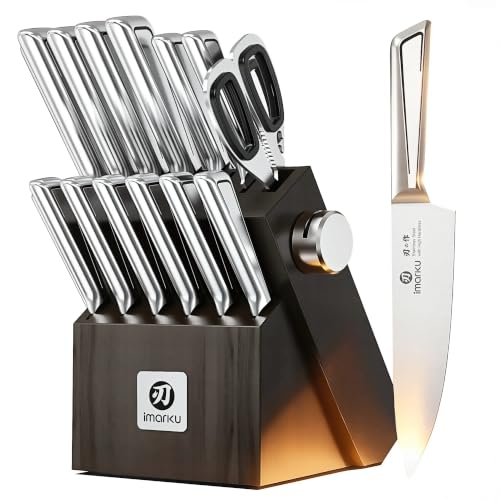 imarku Japanese High Carbon Stainless Steel Knife Set14 Pcs10.06 x 7.09 x 14.57 inchesCheck on Amazon
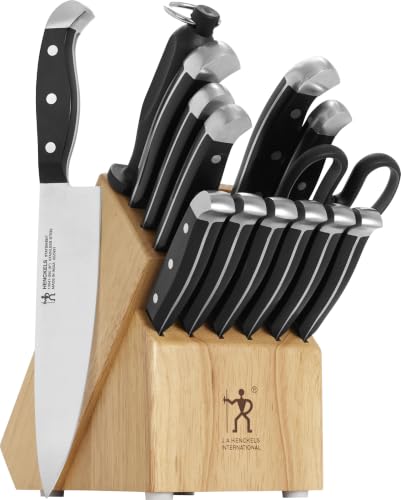
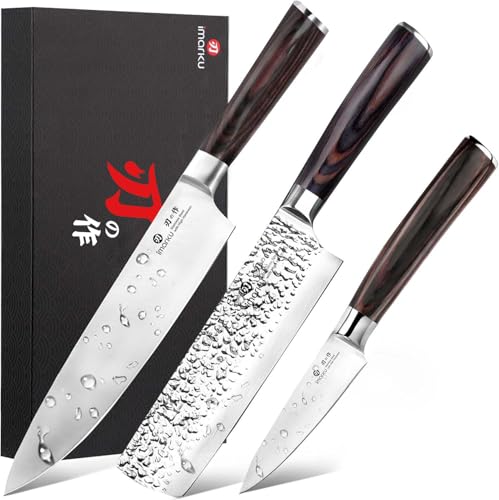
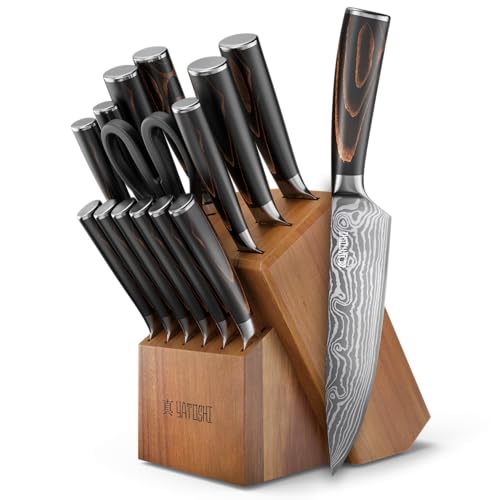
Top 3 picks at a glance
Quick Comparison: Best Professional Knife Sets
| Set | Steel or construction | Typical core blades | Best for | Usual market range |
|---|---|---|---|---|
| Wüsthof Classic 7-Piece | German X50CrMoV15 stainless steel, forged full tang | 8-inch chef’s, 8-inch bread, 4.5-inch utility, 3.5-inch paring, kitchen shears, honing steel | Durable daily prep and easy maintenance | Varies |
| Zwilling Pro 7-Piece | German stainless steel, forged construction, bolster with exposed heel | 8-inch chef’s, 8-inch bread, 5-inch serrated utility, 4-inch paring, shears, honing steel | Professional-style grip and frequent sharpening | Varies |
| Shun Classic 7-Piece | VG-MAX cutting core with layered Damascus cladding | 8-inch chef’s, 6.5-inch utility, 3.5-inch paring, 9-inch bread, shears, honing steel | Very sharp slicing and lighter Japanese profiles | Varies |
| Global 7-Piece | CROMOVA 18 stainless steel, one-piece stainless construction | 8-inch chef’s, 5.25-inch utility, 4-inch paring, 8.75-inch bread, shears, sharpener | Fast, precise prep and compact storage | Varies |
| Messermeister Meridian Elite 7-Piece | German stainless steel, forged full tang | 8-inch chef’s, 9-inch bread, 5-inch utility, 3.5-inch paring, shears, honing steel | Heavy-duty kitchen work without luxury pricing | Varies |
Contents and prices vary by retailer and edition, so confirm the exact blade list before buying. A seven-piece set may include five actual cutting tools, while another counts a block, shears, and honing rod differently.
As an Amazon Associate we earn from qualifying purchases at no extra cost to you.
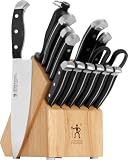
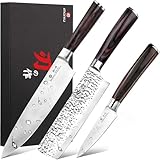

What Makes a Knife Set Professional?
A professional set should cover the tasks that happen repeatedly: portioning vegetables, trimming meat, slicing cooked food, breaking down crusty loaves, and handling small detail work. The most useful minimum is an 8-inch chef’s knife, a 3.5- to 4-inch paring knife, an 8- or 9-inch bread knife, kitchen shears, and a honing tool.
A 6-inch utility knife is helpful for sandwiches, fruit, and smaller hands, but a second chef’s knife, carving knife, or oversized 10-inch blade is less universally useful. More pieces do not automatically mean better value. A set with three rarely used blades can leave you paying for storage rather than capability.
Steel Comparison: Edge Retention Versus Serviceability
German stainless steel
Steels such as X50CrMoV15 and comparable German stainless alloys are common in Wüsthof, Zwilling, and Messermeister lines. They usually prioritize toughness, corrosion resistance, and easy sharpening over maximum edge retention. That makes them well suited to busy kitchens where knives may encounter hard squash, frequent board contact, and rushed maintenance.
Expect a relatively forgiving edge angle, commonly around 14 to 18 degrees per side depending on the model. These knives may need honing or sharpening more often than harder Japanese blades, but damage is generally easier to correct.
Japanese powdered or clad steels
Japanese-oriented sets such as the Shun Classic use harder cutting cores and thinner edge geometry. They can hold a refined edge for longer during slicing and precision work, but the thinner edge is less tolerant of twisting, frozen food, bones, and chopping directly through hard joints.
Use a wooden or soft synthetic cutting board, avoid the dishwasher, and never use the knife as a scraper or lever. Harder steel is not a license to neglect maintenance; it simply changes how often and how carefully maintenance should be performed.
Chromium-rich stainless construction
Global’s CROMOVA 18 steel and one-piece construction offer strong corrosion resistance and a distinctive lightweight feel. The hollow stainless handle suits cooks who prefer a fast, balanced knife, although its narrow shape does not feel comfortable for every hand. Handle comfort matters more than steel prestige during a six-hour prep shift.
Handle Ergonomics and Professional Durability
Forged full-tang knives usually feel substantial and stable, while one-piece stainless designs can reduce seams where food and moisture accumulate. Neither construction is automatically superior. Inspect the transition from blade to handle: there should be no sharp corners, loose scales, or deep gaps that are difficult to clean.
A full bolster can protect fingers and add weight, but it may interfere with sharpening the entire edge and can make a pinch grip feel crowded. Zwilling Pro’s exposed heel is useful for cooks who sharpen from heel to tip. Wüsthof’s heavier profile suits users who prefer momentum. Shun’s lighter, thinner geometry favors controlled slicing. Global’s narrow handle works best when the user likes a slim, direct grip.
For durability, prioritize a securely attached handle, a rigid blade, corrosion-resistant steel, and a manufacturer that supports sharpening or replacement parts. Avoid putting any premium knife in a commercial dishwasher, even when the manufacturer describes the steel as corrosion resistant. Heat, detergent, impact, and loose loading can damage the edge and handle over time.
How to Choose by Kitchen Situation
| Your situation | Best direction | Why |
|---|---|---|
| High-volume vegetable, meat, and general prep | Wüsthof Classic, Zwilling Pro, or Messermeister Meridian Elite | Tough German steel and easy routine maintenance tolerate demanding use. |
| Precision slicing, herbs, fish, and lighter prep | Shun Classic | Thin geometry and harder steel provide a keen, controlled edge. |
| Small hands or a preference for lightweight tools | Global or a compact Japanese-style set | Lower weight and slimmer profiles reduce fatigue for some users. |
| Shared kitchen with inconsistent maintenance | German stainless set with a honing rod | It is more forgiving of imperfect technique and simpler to resharpen. |
| Limited counter space | Compact block or magnetic wall storage | It keeps essential blades accessible without dedicating space to unused pieces. |
Sharpening Systems: What to Buy With the Set
A honing steel does not remove much metal; it realigns a slightly displaced edge. Use it when the knife feels less smooth but still cuts paper or food cleanly. Hold the rod vertically, place the heel at the top, and draw the knife down at the correct angle with light pressure. Five slow passes per side are safer than aggressive sawing.
When honing no longer restores performance, use a whetstone, guided sharpener, or professional sharpening service. A 1,000-grit stone is a practical starting point for repairing a dull edge; a 3,000- to 6,000-grit stone can refine it afterward. A two-stage pull-through sharpener is convenient, but it may remove more steel than necessary and may not match a thin Japanese edge.
For a mixed professional set, a guided system is the easiest way to maintain consistent angles. Set German knives near 15 to 18 degrees per side and thinner Japanese knives near 10 to 15 degrees per side, unless the manufacturer specifies otherwise. Do not force a single angle across every blade.
Storage: Block, Magnetic Strip, or Case?
A traditional block protects edges and keeps tools together, but its slots can trap moisture if knives are stored wet. Dry every knife completely before storage, and place the blade into a slot rather than dropping it edge-first.
A magnetic strip saves counter space and makes blade selection quick. Install it securely and place the spine or flat side against the magnet first, then rotate the edge away from nearby surfaces. A knife roll or fitted case is better for mobile catering or shared professional kitchens, provided the blades are separated with guards.
Best Overall Choice
For the broadest range of serious kitchen work, the Wüsthof Classic 7-Piece and Zwilling Pro 7-Piece are the safest choices because their German stainless construction combines toughness, familiar handling, and accessible sharpening. Choose the Wüsthof for a heavier, traditional feel; choose the Zwilling when a more maneuverable bolster and exposed heel appeal to your grip.
Choose the Shun Classic when edge sharpness and slicing precision outweigh impact resistance. Choose Global when low weight and one-piece stainless construction matter most. Choose Messermeister Meridian Elite when you want forged German-style durability at a generally lower market range.
Care Rules That Extend Service Life
- Wash and dry knives by hand immediately after use.
- Use wood, rubber, or quality synthetic boards instead of glass, stone, or ceramic.
- Never cut bones, frozen food, or hard packaging with a chef’s knife.
- Hone lightly when performance starts to fade; sharpen only when honing stops helping.
- Keep blades separated in a block, sheath, roll, or correctly installed magnetic strip.
- Use the bread knife for crusty loaves and the paring knife for small detail work rather than forcing the chef’s knife into every task.
The best professional knife sets are the ones whose steel, geometry, handle, and maintenance demands match the kitchen that will use them. Buy the smallest set that covers your real prep routine, then spend the remaining budget on a reliable sharpening system and safe storage.
Frequently asked questions
Can these professional knife sets go in the dishwasher?
Premium knives should be washed by hand rather than placed in a commercial dishwasher. Heat, detergent, impact, and loose loading can damage the edge and handle over time, even when the steel is corrosion resistant. This is especially important for Japanese-style knives, which should also be kept away from twisting, frozen food, bones, and hard joints.
How many knives does a useful set really need?
A useful professional set can cover most kitchen tasks with an 8-inch chef’s knife, a 3.5- to 4-inch paring knife, an 8- or 9-inch bread knife, kitchen shears, and a honing tool. A 6-inch utility knife is helpful for smaller tasks, but extra blades are not automatically better value if they are rarely used.
What is the difference between honing and sharpening?
Honing realigns a slightly displaced edge and removes little metal, while sharpening restores performance when honing no longer works. Use light pressure and five slow passes per side when honing. A whetstone, guided sharpener, or professional service can sharpen a dull edge; a 1,000-grit stone is a practical starting point for repairing one.
Which knife set is better for a shared kitchen?
A German stainless steel set is the better direction for a shared kitchen with inconsistent maintenance. These knives generally prioritize toughness, corrosion resistance, and easy sharpening over maximum edge retention. They are more forgiving of imperfect technique and simpler to resharpen, making them practical when several people use the same tools.
How should knives be dried before putting them away?
Dry every knife completely before storing it. In a traditional block, place the blade into a slot rather than dropping it edge-first, because slots can trap moisture. With a magnetic strip, put the spine or flat side against the magnet first, then rotate the edge away from nearby surfaces. Knife rolls should separate blades with guards.