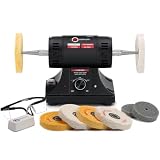
The best jewelry polishing and buffing bench machines for most jewelers in 2026 are 1/4 to 1/2 HP dual-spindle bench lathes running 1725 to 3450 RPM with 4 to 6-inch wheel capacity, and the right choice depends on whether you polish primarily soft metals like silver and gold, hard metals like platinum and stainless steel, or resin and cast pieces that need low-speed control and dust collection.
As an Amazon Associate we earn from qualifying purchases at no extra cost to you.


Our Top Picks


Top 3 picks at a glance
How To Choose a Bench Polishing Machine by Jewelry Material
Motor power and spindle speed matter more than brand. Soft, precious metals need lower surface speed and lighter pressure to avoid burning and metal loss, while hard alloys need higher torque and speed to cut efficiently. Dust and compound loading also change dramatically by material.
- Gold, silver, brass, copper: Needs 1725 RPM or variable speed down to 1000-2000 RPM, 1/4 to 1/3 HP is enough, prioritize soft buffs (cotton, flannel) and compound control to prevent orange peel.
- Platinum, palladium, stainless steel, titanium: Needs 3450 RPM and 1/3 to 1/2 HP with higher torque, uses treated muslin, sisal, and cutting compounds. Motor must not bog down under pressure.
- Resin, acrylic, wax, plated or costume jewelry: Needs variable speed 800-3000 RPM, low vibration, and excellent dust collection. High speed will melt or strip plating instantly.
- Mixed-use studio (repairs, casting cleanup, stone setting): Needs dual-speed or DC variable-speed motor, tapered spindles for quick wheel changes, and integrated or add-on dust collector.
Key Specs Compared: What Actually Affects Polishing Performance
1. Motor Power and Torque
Bench polishers are typically induction motors rated at 1/10 HP to 3/4 HP. For jewelry, 1/4 HP is the minimum practical size for a 4-inch wheel, and 1/3 to 1/2 HP is ideal for a 6-inch wheel. Underpowered motors stall when you press a ring or bracelet into the wheel, creating uneven polish and overheating the workpiece. Look for continuous-duty rating and ball bearings, not sleeve bearings, if the machine will run more than an hour per day.
2. Spindle Speed and Surface Speed
Most single-speed bench lathes are fixed at either 1725 RPM or 3450 RPM (60Hz). Variable-speed models use DC motors or VFD controllers to cover 500-5000 RPM. What cuts is not RPM alone but surface feet per minute (SFPM) at the wheel edge.
Worked calculation – SFPM for jewelry buffs:
Formula: SFPM = (π × Wheel Diameter in inches × RPM) / 12
For a 4-inch wheel at 1725 RPM: (3.1416 × 4 × 1725) / 12 = 1,806 SFPM
For a 4-inch wheel at 3450 RPM: (3.1416 × 4 × 3450) / 12 = 3,613 SFPM
For a 6-inch wheel at 1725 RPM: (3.1416 × 6 × 1725) / 12 = 2,710 SFPM
For a 6-inch wheel at 3450 RPM: (3.1416 × 6 × 3450) / 12 = 5,420 SFPM
Ideal SFPM for jewelry polishing is 2,500-4,500 for cutting compounds and 1,500-2,800 for final rouge color buffing on gold and silver. This is why a 6-inch wheel on 3450 RPM is too aggressive for final finishing on soft metals unless you use a very light touch or a variable-speed controller to drop to 1800-2200 RPM.
3. Wheel Capacity and Spindle Type
Standard jewelry bench lathes accept 4-inch and 6-inch diameter buffs up to 1/2-inch to 3/4-inch thick per side. Tapered spindles (left and right hand threaded) are essential for quick buff changes without tools. Check spindle length: at least 2.5 inches of usable taper allows stacking a buff and a felt lap. Machines that only accept 3-inch mandrel-mounted buffs are better classified as rotary tools, not bench polishers, and lack the torque for bracelet and larger work.
4. Dust Collection and Filtration
Polishing compound, metal fines, and cotton fibers create respirable dust. A bench polisher without collection will coat a small studio in minutes and poses a health risk. Dedicated polishing dust collectors pull 250-400 CFM at the hood and use a two-stage filter: a mesh spark trap plus a 1-micron bag or cartridge. If you work with nickel silver, stainless, or resin, do not operate without a collector and a P2/N95 respirator.
5. Footprint and Mounting
A typical dual-spindle bench lathe is 16-22 inches wide, 10-14 inches deep, and weighs 35-65 lbs. Add 8-12 inches per side for wheel clearance and 18 inches in front for safe hand position. Bolt-down bases reduce vibration significantly; suction or rubber feet alone are insufficient at 3450 RPM. For apartments or shared studios, a variable-speed compact lathe with a 12×18-inch footprint and enclosed motor is more practical than a full-size 1/2 HP industrial buffer.
6. Control Features
Useful controls include forward/reverse switch (to polish both sides of a shank without changing hand position), foot pedal or dial speed control, and thermal overload protection. Reverse is especially valuable for left-handed users and for avoiding catching an edge on prongs. Avoid machines with only a toggle switch on the motor housing if you need frequent speed changes; a separate control box with dial is safer because you can reduce speed without reaching over spinning wheels.
Best Jewelry Polishing and Buffing Bench Machines in 2026 by Class
All of the following classes represent real machine types available from jewelry supply manufacturers in 2026. Prices are general market ranges for new units without buffs or compounds.
| Machine Class | Motor | Speed | Wheel Size | Dust Collection | Footprint | Best For |
|---|---|---|---|---|---|---|
| Compact 1/4 HP Single-Speed Lathe (e.g., Foredom BL Series, EuroTool POL-100 type) | 1/4 HP, 115V induction | 1725 RPM fixed | 4 in (6 in light duty) | None integrated, add-on hood required | 16 x 10 in, ~35 lbs | Silver/gold final polish, small repair shops, usually $350–$550 |
| 1/3 HP Dual-Speed Bench Lathe (e.g., Baldor 333B / 353 type) | 1/3 HP, dual voltage | 1725 / 3450 selectable | 6 in standard | None integrated | 20 x 12 in, ~55 lbs | Platinum, stainless, heavy cutting, usually $650–$950 |
| Variable-Speed DC Bench Lathe (e.g., Foredom Variable Speed Bench Lathe, PepeTools 2X type) | 1/3 to 1/2 HP DC | 800–5000 RPM dial + foot pedal | 4–6 in | Optional integrated filter on some models | 18 x 12 in, ~40 lbs | Mixed metals, resin, plated jewelry, stones in place, usually $700–$1,100 |
| Bench Lathe with Integrated Dust Collector | 1/3 HP + 1/3 HP collector motor | 1725 or variable depending on model | 4–6 in | Built-in 300–350 CFM, 1-micron filter | 24 x 14 in, ~70–85 lbs | High-volume production, small studios needing filtration, usually $900–$1,400 |
| 1/10–1/6 HP Mini Buffing Motor | 1/10–1/6 HP | 0–8000 RPM variable | 2–3 in mandrel buffs only | None | 10 x 8 in, ~12 lbs | Enameling, detail work, not for bracelets/flatware, usually $150–$300 |
Decision Matrix: Match Your Situation to the Right Machine
Use this matrix to avoid overbuying or underpowering.
| If You… | Choose… | Why |
|---|---|---|
| Polish mainly sterling silver and 14k–18k gold, 1–10 pieces per day | 1/4 HP 1725 RPM compact lathe + add-on dust hood | Lower SFPM prevents burning and keeps metal removal minimal; smaller motor runs quieter and cooler |
| Finish platinum, palladium, or stainless steel regularly | 1/3–1/2 HP 3450 RPM or dual-speed lathe | Hard metals require higher SFPM and torque to cut; low speed will glaze compounds without cutting |
| Work with plated, filled, resin, or stone-set jewelry | Variable-speed DC lathe 800–3000 RPM | You need to drop below 2000 RPM for final buffing to avoid stripping plating or melting resin |
| Run a shared studio or work from home | Variable-speed lathe with integrated dust collector | Eliminates separate collector footprint and keeps airborne rouge and silica down without external ducting |
| Do heavy casting cleanup, multi-stage cut-and-color | Dual-spindle lathe with tapered spindles and forward/reverse | Allows sisal cutting wheel on one side, loose cotton color buff on the other, no wheel swapping |
Concrete Settings for Common Jewelry Compounds
Speed and pressure are compound-dependent. These are starting points for 4-inch buffs; increase speed by 15–20% for 6-inch buffs to maintain similar SFPM.
- Cutting stage (Tripoli, Bobbing compound) on silver/gold: 2000–2800 RPM, firm treated cotton or muslin wheel, medium pressure, 2–3 seconds per contact. Let the compound do the work; excessive pressure flexes prongs.
- Cutting stage on platinum/stainless: 3000–3450 RPM, sisal or treated muslin wheel, Zam or platinum compound, firm pressure. Keep workpiece moving to avoid flat spots.
- Coloring / final stage (Rouge, Luxi Blue) on gold/silver: 1400–2000 RPM, loose flannel or cotton buff, very light pressure, 1–2 seconds per pass. High speed at this stage causes orange-peel and embeds rouge.
- Resin / acrylic / lacquer: 800–1200 RPM, loose cotton with plastic polish (e.g., Menzerna or NOVUS type), feather-light pressure. If resin smears, speed is too high or buff is loaded with too much compound.
- Rhodium-plated or gold-filled: 1200–1600 RPM maximum, clean soft buff with minimal compound. If you see base metal color coming through, stop immediately and switch to a hand polish.
Rake buffs with a buff rake for 2–3 seconds after every 2–3 pieces to remove caked compound and metal. A glazed buff cuts 60% slower and generates more heat regardless of motor power.
Installation and Maintenance Checklist
- Bolt the lathe to a heavy bench 34–36 inches high; operate standing with wheels at elbow height for control.
- Wire a dedicated 15A circuit; 1/2 HP motors draw 6–8 amps on startup and will trip thin extension cords.
- Position dust hood 2–3 inches behind wheels, with hood velocity at least 200 FPM at wheel edge. Clean or replace filter when suction drops noticeably.
- Dress tapered spindles with light oil weekly, check buff balance, and replace buffs that wobble or have loose stitching.
- Use separate buffs for each compound and label them. Cross-contamination from tripoli onto a rouge buff will scratch finished surfaces.
FAQ
Do I need 3450 RPM for jewelry?
Only if you regularly polish platinum, palladium, or hardened steel. For silver and gold, 1725 RPM or a variable-speed lathe dialed to 1800–2200 RPM gives a better finish with less risk of burning. Many jewelers own a dual-speed or variable-speed machine so one lathe covers both ranges.
Can I use a bench grinder as a jewelry buffer?
No. Bench grinders run at 3450 RPM with coarse guards, no tapered spindles, and no dust collection for fine compound. They lack the torque curve and safety spacing for jewelry buffs and will grab and throw small pieces. A proper jewelry bench lathe has extended tapered spindles and more usable side clearance.
What size buff should I start with?
Start with 4-inch buffs on a 1/4 to 1/3 HP lathe. They generate lower SFPM at the same RPM, which is more forgiving on gold and silver. Move to 6-inch buffs only if you need faster cutting on larger flatware, bracelets, or belt buckles and your motor is 1/3 HP or higher.
How do I know if my dust collector is adequate?
Hold a tissue 6 inches in front of the hood with the collector on and wheels spinning. It should pull firmly toward the filter.