Power supply warranties are one of the few spec-sheet numbers that tell you something real about build quality. A manufacturer does not offer a 12-year warranty on a unit stuffed with cheap capacitors, because they would lose money on returns. Learning to read the warranty next to the efficiency rating gives you a shortcut to a PSU’s expected lifespan and the maker’s own confidence in it.
As an Amazon Associate we earn from qualifying purchases at no extra cost to you.


Our Top Picks
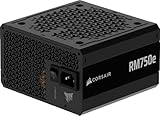
 CORSAIR RM750e ATX 3.1 PCIe 5.1 Ready 750W750 watts5.91 x 5.51 x 3.35 inches3.3 poundsCheck on Amazon


Top 3 picks at a glance
What the warranty actually signals
Warranty length correlates strongly with the tier of internal components, especially the capacitors, the fan, and the topology. Budget units with a 3-5 year warranty typically use group-regulated designs and mid-grade caps. Units with 10-12 year coverage almost always use DC-DC conversion, Japanese 105C capacitors, and higher-quality fans with better bearings.
Typical warranty by class
| Warranty | Typical tier | Common internals | Rough price (750W) |
|---|---|---|---|
| 2-3 years | Entry / OEM | Group regulated, generic caps | Varies |
| 5-7 years | Mid-range 80+ Gold | DC-DC, mixed caps | Varies |
| 10 years | Enthusiast Gold/Platinum | DC-DC, Japanese caps, FDB fan | Varies |
| 12 years | Flagship Platinum/Titanium | Premium caps, top fan, ATX 3.1 | Varies |
Does a long warranty mean a longer life?
Usually, but not always. The warranty covers manufacturing defects, not wear from heat and hours. A 12-year unit run hot in a cramped case can still degrade faster than a 5-year unit kept cool. That said, the components that earn a long warranty are the same ones that resist capacitor aging, so the correlation holds in practice.
Registration and transfer traps
Some brands require you to register within 30-90 days of purchase to get the full term, otherwise you drop to a shorter default. Warranties are also often tied to the original buyer, so a used unit bought without a receipt may have no coverage at all. Always keep the invoice.
How to use warranty when shopping
Treat the warranty as a tie-breaker between units with similar wattage and efficiency. A PSU that outlives two or three GPU upgrades pays for itself.
When you do not need 12 years
If you upgrade your whole platform every three to four years and sell the old parts, a solid 7-year Gold unit is plenty and saves money you could put toward the GPU. The very long warranties matter most to people who keep a PSU across many builds.
FAQ
Is a longer PSU warranty worth paying extra for?
For a long-term build, yes. For a short-lived budget rig it matters less.
Does the warranty reset if I RMA the unit?
Almost always the replacement inherits the remainder of the original term, not a fresh count. A few brands offer a short additional coverage on the replacement, but assume the clock keeps running from your original purchase date.
How makers can afford long warranties
A 12-year warranty is not generosity; it is statistics. Manufacturers model failure rates and know that a unit built with 105C Japanese capacitors and a fluid-dynamic-bearing fan has a very low chance of failing within the coverage window under normal use. Cheap units fail far more often, so a long warranty on them would bankrupt the maker in returns. This is why the warranty is such a reliable proxy for internal quality. It also explains why the same platform sometimes ships with different warranties under different brands: the longer-warranty version has been binned or built to a higher standard. When you see a surprisingly long warranty on a cheap unit, read reviews carefully, because occasionally it signals aggressive marketing rather than genuinely premium internals.
Bottom line
Warranty length is a free quality signal baked into the box. Five years is fine for budget builds, seven to ten is the sweet spot for most gamers, and twelve is a flag for flagship internals worth buying if you keep hardware a long time. Register the unit, keep the receipt, and let coverage break ties between otherwise similar PSUs.