When you shop for a case, the spec list includes motherboard support like “ATX, E-ATX up to 280mm.” E-ATX sounds like the premium option, so builders often reach for the bigger case assuming it is better. Usually it is overkill. Here is what E-ATX actually gives you and how to tell whether your build needs it.
As an Amazon Associate we earn from qualifying purchases at no extra cost to you.


Our Top Picks
 CORSAIR 7000D Airflow Full-Tower ATX PC Case7000 Series21.65 x 9.76 x 23.62 inches41.23 poundsCheck on Amazon


Top 3 picks at a glance
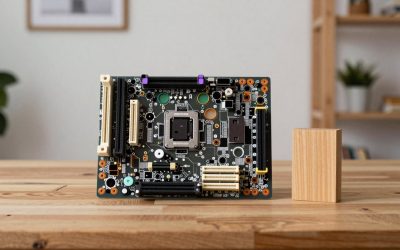
What E-ATX means
Standard ATX motherboards are 305 x 244mm. E-ATX (Extended ATX) is wider, up to 305 x 330mm, though many boards labeled E-ATX are only slightly wider than ATX (around 267-277mm). That extra width makes room for beefier VRMs, more RAM slots or PCIe lanes on HEDT and workstation platforms, and space for elaborate heatsinks. A case rated for E-ATX simply has a wider motherboard tray and mounting holes to fit those boards.
The compatibility trap
Because “E-ATX” spans a range of widths, a case that says it supports E-ATX may only fit boards up to a certain millimeter width. A very wide E-ATX board can overhang the cable-routing grommets, blocking tidy cable management, so always check the case’s stated maximum motherboard width in mm, not just the “E-ATX” label.
| Standard | Size (mm) | Typical use | Case needed |
|---|---|---|---|
| Mini-ITX | 170 x 170 | Compact builds | ITX or larger |
| Micro-ATX | 244 x 244 | Budget/mid | mATX or larger |
| ATX | 305 x 244 | Most gaming builds | Mid or full tower |
| E-ATX | up to 305 x 330 | HEDT, workstation, dual-CPU | Full tower / E-ATX rated |
Do you actually need it?
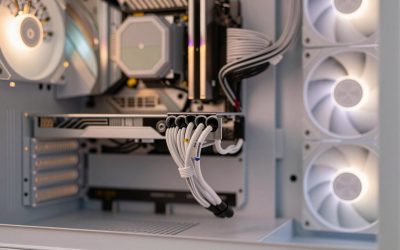
For a mainstream gaming or content build on a standard AMD or Intel consumer platform, your motherboard is ATX, and a good mid or full tower is all you need. E-ATX is worth the larger, pricier case only if you are running a genuine workstation/HEDT or dual-socket board, or you specifically want the extra internal room for a massive custom loop with thick radiators. Buying an E-ATX case for a regular ATX board just wastes desk space and money, though the extra internal volume can help airflow and cable routing if you have room for it.
The upside of a bigger case anyway
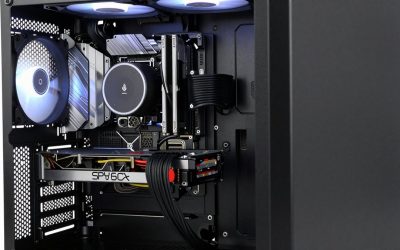
Even without an E-ATX board, larger cases ease radiator mounting, GPU clearance, and cable management. So the real question is not “E-ATX vs ATX board” but “do I want the room?”, just do not assume you need E-ATX support unless your motherboard is actually that size.
FAQ
Will an ATX board fit in an E-ATX case?
Yes. E-ATX cases support all smaller standards, ATX, micro-ATX, and usually mini-ITX, using the same mounting holes. The reverse is not true: an E-ATX board will not fit a case that tops out at ATX.
Why do some E-ATX boards not fit “E-ATX” cases?
Because E-ATX covers a width range. A case may only clear boards up to, say, 277mm, while a full 330mm-deep E-ATX board overhangs the cable grommets. Always check the case’s maximum motherboard width in millimeters before buying.
Bottom line
E-ATX gives you a wider board for workstation, HEDT, or dual-CPU platforms, not extra performance for a normal gaming rig. Standard gaming builds use ATX and fit any mid or full tower. Choose E-ATX support only if your motherboard truly is E-ATX, and always verify the case’s exact maximum width, since “E-ATX” is a range, not one size.
There is a subtle downside to genuinely wide E-ATX boards even in a compatible case: the board can extend over the cable-routing grommets along the tray’s edge, forcing you to run the 24-pin and front-panel cables before or around the board and leaving them partly exposed. Reviewers of full E-ATX builds often note this cable-management wrinkle. So if you value a clean back-of-tray look, either confirm the case was specifically designed with grommets placed for full-width boards, or stick with standard ATX, which every mid and full tower routes cleanly. For the overwhelming majority of gamers, ATX is not a compromise, it is the mainstream standard that all the best-supported cases are built around.