Choosing between an SFX and an ATX power supply is really a choice about the case you plan to build in, not just the parts list. Both standards deliver the same 12V, 5V and 3.3V rails your components need, but they differ in physical footprint, fan size, cable length and the wattage ceiling you can realistically reach. Getting this decision right early saves you from the frustration of a beautiful build that will not close its side panel.
As an Amazon Associate we earn from qualifying purchases at no extra cost to you.


Our Top Picks
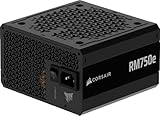
 CORSAIR RM750e ATX 3.1 PCIe 5.1 Ready 750W750 watts5.91 x 5.51 x 3.35 inches3.3 poundsCheck on Amazon
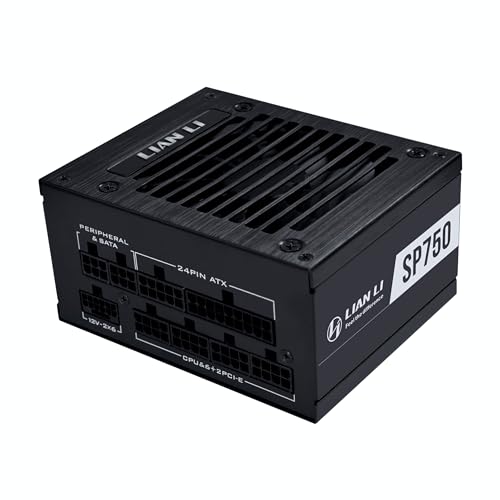
Top 3 picks at a glance
The core physical differences
An ATX unit is the classic full-size PSU: 150 mm wide, 86 mm tall and typically 140–180 mm deep. It almost always uses a 120 mm or 135 mm fan, which can spin slowly and stay quiet. SFX (Small Form Factor) trims the box to 125 x 63.5 mm with a depth around 100 mm, usually paired with a 92 mm fan. SFX-L stretches the depth to about 130 mm so it can fit a quieter 120 mm fan while keeping the narrow face.
| Spec | ATX | SFX | SFX-L |
|---|---|---|---|
| Width x Height (mm) | 150 x 86 | 125 x 63.5 | 125 x 63.5 |
| Typical depth (mm) | 140-180 | 100 | 130 |
| Common fan size | 120-135 mm | 92 mm | 120 mm |
| Practical wattage ceiling | 1600 W+ | ~850 W | ~1000 W |
| Typical price premium | baseline | +20-40% | +25-45% |
When each one makes sense
Pick ATX for value and headroom
If your case has a standard PSU shroud, ATX is the default and usually the smart pick. You get more watts per dollar, a broader selection of 80+ Gold and Platinum units, longer cables, and a bigger fan that idles silently under light gaming loads. For a mid-tower housing an RTX 5070-class GPU pulling 250–350 W total system, a 750–850 W ATX unit is cheaper and quieter than an equivalent SFX.
Pick SFX for small form factor builds
Mini-ITX cases in the 10–20 liter range often only accept SFX or SFX-L. Here the compact box is not a luxury, it is a requirement, and the shorter depth frees up room for the GPU and airflow. The trade-offs are real: 92 mm fans ramp louder, top-end wattage is limited to roughly 850 W for SFX and 1000 W for SFX-L, and you pay a 20–45% premium for the same rated output.
Cables, adapters and compatibility
Most SFX units ship with an SFX-to-ATX bracket so they can bolt into a standard case, which is handy if you plan to shrink your build later. Cable length is the hidden catch: SFX cables are often 100–150 mm shorter, and in a full-tower with a bottom-mounted PSU the 24-pin or EPS cable may not reach without an extension. Always check the connector count too, because a 700 W SFX unit may offer fewer PCIe or 12VHPWR leads than an ATX unit of the same wattage.
Efficiency, noise and cost in practice
Beyond raw fit, the two form factors diverge on day-to-day behavior. Because an ATX unit uses a larger 120–135 mm fan, it can often stay in a semi-passive or zero-RPM mode at low load and only spin up past 40–50% draw, so a well-matched ATX build is frequently silent while browsing or watching video. An SFX unit’s 92 mm fan has less surface area, so it starts spinning sooner and ramps to higher RPM under the same heat, which is audible in a quiet room.
Cost scales with density too. A mainstream 750 W 80+ Gold ATX unit is one of the most competitive categories in PC hardware, while an equivalent 750 W SFX unit commands a 20–40% premium simply because cramming the same power into a smaller shell with tighter thermals is harder to engineer. If your case will accept either, the ATX version is almost always the better value. Reserve the SFX premium for builds where the small footprint genuinely unlocks a case you could not otherwise use, and treat the compact size as the feature you are paying for rather than an afterthought.
FAQ
Can I use an SFX power supply in a normal ATX case?
Yes, with the included SFX-to-ATX adapter bracket almost every SFX unit mounts in a standard case. The only downside is slightly shorter cables and a smaller fan, so there is little reason to do it unless you plan to reuse the unit in a future small build.
Do SFX units run hotter or fail sooner?
A quality SFX unit from a reputable maker is just as reliable as ATX; the internals are simply packed tighter and the smaller fan works harder. Expect a bit more noise under sustained 80%+ load, but the same 7–10 year warranties and hold-up standards apply.
Bottom line
Let the case decide. If you are building in a standard mid-tower or larger, ATX gives you more watts, longer cables and quieter operation for less money. If your chassis is a compact Mini-ITX box under 20 liters, choose SFX for tight builds or SFX-L when you want a 120 mm fan and a little more headroom. Match the wattage to your GPU with 30% margin and confirm cable reach before you buy.