Your power supply is the last line of defense between a messy wall outlet and your expensive components. Two everyday grid problems, brownouts and surges, test it in opposite directions: one starves it of voltage, the other floods it. Knowing how a good PSU responds, and where it needs help, tells you when a surge protector or battery backup is worth it.
As an Amazon Associate we earn from qualifying purchases at no extra cost to you.

Our Top Picks
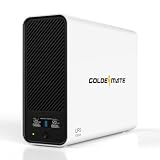
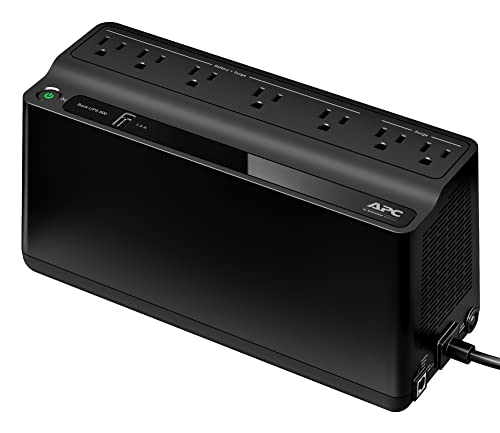 APC BE600M1 UPS Battery Backup & Surge Protector4.13D x 10.79W x 5.47H inches10.79 x 4.13 x 5.47 inches7.5 PoundsCheck on Amazon
 APC BX1500M UPS Battery Backup & Surge Protector1500VA15.04 x 3.94 x 9.84 inches24.25 poundsCheck on Amazon
What a brownout does
A brownout is a temporary drop in mains voltage, often during heavy grid demand or when a large appliance starts. Your PSU still needs to deliver full power to the PC, so as input voltage falls it draws more current to compensate. A quality unit with a wide input range and active power factor correction rides through minor sags without the PC noticing.
When brownouts cause trouble
If the voltage drops far enough, the PSU can no longer maintain its outputs and its protection circuitry shuts the system down to avoid feeding the PC unstable power. This is safer than the alternative but still an ungraceful stop that risks data loss. Repeated deep brownouts also stress the PSU’s input components over time.
| Event | What happens at the wall | Good PSU response |
|---|---|---|
| Minor brownout | Voltage sags briefly | Rides through, draws more current |
| Deep brownout | Voltage far below range | Clean shutdown via protection |
| Small surge | Voltage spikes briefly | Input filtering absorbs it |
| Large surge / spike | High-energy transient | Needs external surge protection |
What a surge does
A surge is a brief spike above normal voltage, from grid switching or nearby lightning. A PSU’s input filtering and MOV components absorb small surges, but a large high-energy spike can exceed what the unit is built to clamp. That is why a surge protector or, better, a battery backup with surge suppression belongs between the wall and any valuable system.
The role of a UPS
An uninterruptible power supply solves both problems at once. During a brownout it switches to battery and holds voltage steady, and during a surge it clamps the spike before it reaches the PSU. Even a modest line-interactive UPS gives you clean power plus a minute or two to save work and shut down safely, which pays for itself the first time it prevents a corrupted save or a hard crash.
FAQ
Will a good PSU protect me from lightning?
Not fully. A PSU handles small surges, but a direct or nearby lightning strike produces energy far beyond what its internal clamping can absorb. Use a quality surge protector or UPS, and unplug during severe storms for real protection.
Do brownouts damage my hardware?
A single shallow brownout usually just causes a shutdown at worst, which a good PSU handles safely. The concern is repeated deep sags stressing the input stage over time, and the abrupt stops risking data loss, both of which a UPS eliminates.
Choosing between a surge protector and a UPS
A basic surge protector clamps voltage spikes but does nothing for brownouts or outages, so it protects against the sudden spike but leaves you exposed to sags and blackouts. A line-interactive UPS regulates modest voltage swings with its own circuitry and switches to battery for deeper sags and full outages, covering the whole range of grid misbehavior. For a valuable gaming or work PC, the UPS is the more complete answer.
Size a UPS by the runtime you actually need, which is usually just enough to ride out brief dips and to save and shut down during a longer outage, not to keep gaming for an hour. A unit that carries your system’s real draw for two to five minutes is plenty for a clean shutdown, and its automatic voltage regulation quietly smooths the daily sags a surge strip would pass straight through.
Does a UPS improve my PSU’s lifespan?
Indirectly, yes. By absorbing surges and holding voltage steady during sags, a UPS spares the PSU’s input stage the repeated stress of dirty power, and it prevents the abrupt shutdowns that can corrupt data. Cleaner input power means the PSU works less hard at its margins and tends to last longer.
Bottom line: a quality PSU rides through minor sags and small surges and shuts down cleanly when the grid gets ugly, but it cannot stop a big spike or hold power during a deep brownout. A UPS with surge suppression covers the gap for both.