The most common first-fill disaster in custom water cooling is a pump running dry for a few seconds and burning out. It almost always traces back to reservoir placement. Position the reservoir correctly and priming the pump becomes trivial; get it wrong and you fight air bubbles and risk the one component you must never starve.
As an Amazon Associate we earn from qualifying purchases at no extra cost to you.

Why reservoir position matters
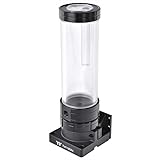
A pump moves liquid but hates air. If it runs without coolant feeding its inlet, even briefly, it can overheat and fail. The reservoir’s job is to hold a buffer of fluid and feed the pump continuously, so the golden rule is that the reservoir outlet should sit above the pump inlet. Gravity then keeps the pump flooded even before it starts turning.
The reservoir-above-pump rule
Mount the reservoir so its bottom outlet is higher than, and feeds directly into, the pump inlet with as short a run as possible. Many builders use a combined pump-reservoir combo unit precisely because it guarantees this relationship. A short, straight feed from res to pump means the pump is primed the instant you pour fluid in.
| Arrangement | Pump priming | Air-bleed ease |
|---|---|---|
| Reservoir above pump inlet | Excellent, gravity-fed | Good |
| Pump-reservoir combo | Excellent | Good |
| Reservoir level with pump | Marginal, may gurgle | Harder |
| Reservoir below pump | Poor, dry-start risk | Difficult |
Priming and first fill
Fill the reservoir before the pump ever runs. With the system otherwise off, use the motherboard power jumper or a dedicated PSU jumper so only the pump receives power, and pulse it in short bursts. Each burst pushes fluid through a section of loop and pulls more from the reservoir, which you keep topping up so it never empties. Never run the pump continuously until the reservoir stays reliably full.
Chasing out trapped air
After the loop is mostly full, run the pump at a modest speed and gently tilt or rock the case. Air pockets hide in radiators and high points, so tilting lets them rise toward the reservoir where they escape. Top up as the level drops. Over the next day the last micro-bubbles collect in the reservoir and the loop goes quiet, which is your sign it is fully bled.
FAQ
What happens if the pump runs dry during first fill?
A dry run of even a few seconds can overheat the pump’s motor and bearing and shorten its life or kill it outright. That is why you pulse the pump and keep the reservoir topped up, so liquid always reaches the inlet.
Does the pump have to be at the lowest point in the loop?
Not the lowest point overall, but its inlet should be below the reservoir outlet so it stays flooded. Placing the pump low in the case, fed by a reservoir mounted above it, is the reliable arrangement most builders use.
Pump orientation and longevity
The two common pump types, D5 and DDC, tolerate mounting orientation differently, but both strongly prefer to be fed rather than to pull fluid uphill from a low reservoir. A DDC pump in particular runs hot and relies on coolant flow to cool its motor, so starving it even briefly during fill can shorten its life. Keeping the reservoir above the inlet is as much about pump longevity as it is about easy priming.
Vibration is the other longevity factor. Rigidly bolting a pump to the case transmits its motor hum into the panels, so most pump mounts use rubber decoupling. A well-mounted, well-fed pump running at a moderate speed rather than full tilt will outlast one that is starved, rigidly mounted, and pushed to maximum rpm to compensate for a restrictive loop.
What pump speed should I run once the loop is filled?
After bleeding, most loops run happily with the pump at a moderate setting rather than maximum, because flow beyond a certain point yields diminishing temperature gains while adding noise and wear. Set it just high enough that temperatures are stable and the pump is inaudible, then leave it there.
Bottom line: put the reservoir above the pump, fill it before powering the pump, and prime in short pulses while topping up. Respect that sequence and your loop fills cleanly without ever risking a dry-start.