
The RTX 3070 and the RTX 4060 Ti 8GB land in the same gaming performance class, so the better buy is whichever is cheaper and in better condition, with the RTX 4060 Ti favoured for lower power use and DLSS 3 frame generation, and the RTX 3070 favoured for its wider memory bus and slightly better 4K showing. Reviewers who compare them describe the performance gap as minimal.
As an Amazon Associate we earn from qualifying purchases at no extra cost to you.


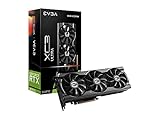

Our Top Picks
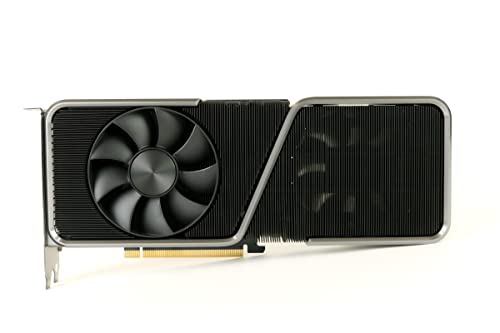

Top 3 picks at a glance
Specs side by side
| Spec | GeForce RTX 3070 | GeForce RTX 4060 Ti 8GB |
|---|---|---|
| Architecture | Ampere (GA104) | Ada Lovelace (AD106) |
| CUDA cores | 5,888 | 4,352 |
| Memory | 8 GB GDDR6 | 8 GB GDDR6 |
| Memory bus | 256-bit | 128-bit |
| Memory bandwidth | 448 GB/s | 288 GB/s |
| L2 cache | 4 MB | 32 MB |
| Board power | 220 W | 160 W |
| PCIe interface | PCIe 4.0 x16 | PCIe 4.0 x8 |
| Frame generation | Not supported (DLSS 3 frame generation needs 40-series) | DLSS 3 frame generation |
Figures come from NVIDIA’s published specifications as reproduced by comparison sites such as Technical City and Versus. Some third-party pages carry errors, for instance listing core counts that belong to other cards, so cross-check against the maker’s product page.
Why they perform alike despite different specs
On paper the RTX 3070 has more cores and a bus twice as wide. The RTX 4060 Ti counters with a newer architecture, higher clock speeds and a much larger cache, which reduces how often the card needs to reach out to video memory. Reviewers such as PC Guide and Technical City report aggregate results within a couple of percent of each other, with the 4060 Ti marginally ahead overall and the 3070 a few percent ahead at 4K, where the wider bus and bandwidth help. The exact gap depends on the game, so no single figure should be treated as universal.
Where each card fits
1080p
Both handle current games at high settings in a typical setup. The two cards sit close together here, so the choice is not about frame rate.
1440p
This is the sweet spot for both. Reviewers describe them as capable at 1440p for most titles, with settings reduced in the heaviest games. Both carry 8 GB of video memory, which is the main limit in newer games with large textures.
4K
Neither is a natural 4K card. The 3070’s extra bandwidth gives it a small edge at the higher resolution, per reviewers, but both rely on lowered settings or upscaling for demanding games.
Platform, power and compatibility differences
| Factor | RTX 3070 | RTX 4060 Ti 8GB |
|---|---|---|
| Power draw | Higher, 220 W listed | Lower, 160 W listed |
| Power connector | Varies by model; check the specific card | Varies by model; check the specific card |
| PCIe link | x16, full-width | x8 electrical, so older PCIe 3.0 boards halve the lane speed |
| Cooling and noise | Depends on partner design; more heat to remove | Typically cooler and quieter at the same cooler size |
| Availability | Mainly used or leftover stock | Sold new in many regions |
The x8 interface of the 4060 Ti matters on older motherboards. In a PCIe 3.0 slot, it runs at x8 of PCIe 3.0 bandwidth, which some reviewers show can cost performance in certain games. In a PCIe 4.0 or 5.0 slot the card has no such limit. If you are upgrading an older platform, that is worth weighing.
Always follow the card maker’s power supply guidance. Check the recommended wattage on each model’s product page and confirm your power supply has the required connectors. If a card uses a 12-pin or 12V-2×6 connector, seat it fully and follow the maker’s instructions.
DLSS and features
Both cards support DLSS upscaling and ray tracing. The 4060 Ti adds DLSS 3 frame generation, which NVIDIA lists as a 40-series feature. Frame generation can raise displayed frame rates in supported games, though it adds latency and works best from an already decent base frame rate. The 3070 does not support it. Check whether the games you play use the feature.
The 8 GB question
Both cards have 8 GB of video memory. In newer games with high texture settings, 8 GB can become a limit at 1440p and above, and reviewers regularly point to this as the key weakness of both. If you want long-term headroom and mostly play recent releases, a card with more video memory deserves a look. For older or esports titles, 8 GB remains workable.
Which to buy: decision table
| Choose | If |
|---|---|
| RTX 4060 Ti 8GB | You want lower power draw, a quieter build, DLSS 3 frame generation, a new card with warranty, and a PCIe 4.0 or newer board |
| RTX 3070 | You found a good used or clearance deal, play at 4K occasionally, or run an older board and want the full x16 link |
| Neither | You want more than 8 GB of video memory for heavy new games |
Upgrade logic
Moving from the RTX 3070 to the 4060 Ti is not an upgrade in raw performance. It makes sense only if you value efficiency or frame generation. Moving to either card from a GTX 1060, GTX 1660 or RTX 2060 class is a major step up. If you already own a 3070, a better target is a card with a clearly higher performance class and more memory.
Buying used: points to check
- Ask about previous heavy use such as mining, and look at fan noise and temperatures.
- Confirm the seller’s return terms and any remaining warranty.
- Check that the card physically fits your case and that your power supply has the needed connectors.
- Look at the model’s cooler quality, since partner designs vary.
Common mistakes
- Judging by core count. Different architectures make core counts a poor comparison.
- Ignoring the PCIe x8 link. It matters on older motherboards.
- Expecting big gains from a swap. The cards are close in speed.
- Believing unsourced benchmark charts. Use reputable reviewers and the maker’s page.
- Forgetting power connectors. Check the exact model before buying.
Frequently Asked Questions
Is the RTX 4060 Ti faster than the RTX 3070?
Slightly in aggregate according to some reviewers, but the gap is minimal. The 3070 tends to catch up or lead a little at 4K. Individual games vary.
Which uses less power?
The RTX 4060 Ti, with a listed board power of 160 W versus 220 W for the RTX 3070. That can mean less heat and an easier power supply match.
Does the RTX 3070 support DLSS 3 frame generation?
No. NVIDIA lists frame generation as a feature of 40-series cards. The 3070 supports DLSS upscaling but not frame generation.
Is 8 GB of VRAM enough?
For many games at 1080p and 1440p, yes, but some newer titles at high texture settings can exceed it. Reduce texture quality if you see stutter. If you play heavy new games, consider more memory.
Does the 4060 Ti’s x8 interface matter?
It matters mostly on PCIe 3.0 motherboards, where bandwidth is halved compared with a PCIe 4.0 slot. On PCIe 4.0 or 5.0 boards it is not a concern for most users.
Is it worth upgrading from a 3070 to a 4060 Ti?
Generally no, because performance is similar. It could make sense only for lower power draw and frame generation, and then only if the sale of your old card covers most of the cost.
Related guides
More from Amazon
Programs that pair well with the guide above. Offers and eligibility are set by Amazon and may change.
Free shipping on eligible items, Prime Video and more. Eligible new members can start with a free trial.
Start a Prime free trialAd-free music streaming. Eligible new subscribers can start with a free trial.
Try Music Unlimited freeA Prime membership for ages 18-24 with a trial period. Eligibility is set by Amazon.
See Prime for Young AdultsAudiobooks and podcasts to listen to on the go. Eligible new members can start with a free trial.
Try Audible freeAs an Amazon Associate we earn from qualifying purchases.


