The best premium vacuum tube amplifier for warm audiophile sound is the Douk Audio F5, a pure Class A single-ended stereo amp whose deliberately low power and simple topology are exactly what produce the rich second-harmonic character people mean when they say “tube warmth” — provided your speakers are efficient enough to work with it. Pair it with a speaker rated around 93 dB/W/m or higher in a small-to-medium room and it sounds liquid, immediate and holographic; pair it with a typical 86 dB bookshelf and it runs out of steam on peaks. If your serious listening happens on headphones rather than speakers, the Woo Audio WA6 2nd gen is the strongest overall pick here. If you want one box that handles Bluetooth, USB, optical and coaxial sources and drives ordinary speakers, the Douk Audio ST-01 PRO is the practical all-rounder. And if you already own a good solid-state power amp, the AIYIMA T20 balanced ECC83 preamp is the least expensive way to add tube flavor without giving up grip and damping. The rest of this guide lays out the topology, power and matching math behind those picks, then compares twelve currently available options.
Our Top Picks


Top 3 picks at a glance
Quick Comparison
The table below covers every product in this roundup. Price tiers are deliberately coarse — listing prices move daily — and “key specs” reflect what each product is sold as, not bench results. Use the “best for” column to narrow to two or three candidates, then read the full section for the trade-offs.
| Product | Best for | Key specs | Price tier |
|---|---|---|---|
| Douk Audio ST-01 PRO | One-box hybrid system driving ordinary speakers | 200 W rated hybrid stereo power amp; Bluetooth; USB DAC; coaxial and optical inputs | Mid-range |
| Mullard 12AX7 | Retuning an existing 12AX7 preamp stage | Single new-production 12AX7/ECC83 dual triode; 9-pin noval; high-mu gain stage | Budget |
| Fosi Audio P3 | Desktop preamp plus headphone output with Bluetooth | Tube preamp stage; headphone amp output; Bluetooth input; mini chassis | Mid-range |
| MICNAUX 5654W | Cheapest way to put tube tone on a desk | 5654W vacuum tube preamp; HD stereo mini power amp; volume control; 3-band EQ | Budget |
| Fosi Audio GR70 | Headphone-first listening at a desk | 5654W ×2 and 6AC7 ×2 tubes; tube headphone amp and preamp; mini HiFi form factor | Premium |
| Minhe 6J1P EV modules (two units) | DIY builders adding a tube stage to existing gear | Two 6J1P-EV vacuum tube preamp modules; bare-board/module format | Budget |
| Douk Audio F5 | Warm single-ended Class A into efficient speakers | Pure Class A; single-ended stereo topology; RCA input; no Bluetooth or DSP | Premium |
| Douk Audio P6 MINI | Bluetooth preamp with tone controls | Mini tube preamp; Bluetooth receiver; bass and treble tone control | Mid-range |
| Woo Audio WA6 2nd gen | Reference headphone listening | Class A vacuum tube headphone amplifier; transformer-coupled output; silver finish | Premium |
| AIYIMA T20 | Balanced preamp feeding a separate power amp | Fully balanced ECC83 tube preamplifier; XLR and RCA inputs/outputs | Premium |
| Douk Audio U10 | Headphone amp with matched tubes included | Tube headphone amplifier; GE JAN 5654W matched vacuum tubes; premium upgrade bundle | Mid-range |
| Vacuum Tube Amp Analog Vintage Tote Bag | Gifting a tube-amp fan or hauling gear to a meet | Printed tote bag; apparel/merchandise item; no electronics | Budget |
How We Chose
The first filter was category fit: a genuine tube gain stage or tube power stage had to be part of the signal path, which is why the list separates real amplification from tube buffers, tube preamps and tube-headphone designs rather than lumping them together. The second filter was topology transparency. Products that state their operating class, tube complement and input set clearly are more useful to a buyer than ones that market “tube sound” without saying where the tubes sit.
The third criterion was matching headroom — whether the product’s rated power and output impedance make sense for realistic speakers and headphones, since a 5 W single-ended amp and a 200 W hybrid solve completely different problems. Fourth, upgrade path: socket types that accept widely available current-production tubes, preamp outputs that let you add a bigger power amp later, and standard RCA or XLR connections all count in a product’s favor. Finally, price tier and use case. A budget tube preamp that measurably changes the voicing of a desk system earns its place just as a premium headphone amp does, as long as the section is honest about which job it does and which it does not.
1. Douk Audio ST-01 PRO – Best for One-Box Hybrid Power and Everyday Speakers
As an Amazon Associate we earn from qualifying purchases at no extra cost to you.

The ST-01 PRO is the pick for the person who wants tube character without rebuilding their whole system around it. It is sold as a 200 W, two-channel hybrid vacuum tube power amplifier with Bluetooth, a USB DAC, and coaxial and optical digital inputs, which means it can sit at the center of a desktop or living-room setup and accept a PC, a console, a phone and a CD transport without an external DAC or switcher. Because the tube stage is paired with a solid-state output section, it can drive the sort of 86–90 dB bookshelf speakers that a small single-ended amp simply cannot. That makes it the pragmatic entry into tube-flavored sound rather than the purist’s endpoint.
One number deserves context: the 200 W rating is a marketing figure quoted under the loose distortion thresholds that tube and hybrid amps are usually specified at, so treat it as “plenty for normal speakers” rather than as a like-for-like comparison with a 200 W Class AB solid-state amp. In practice you are buying the input flexibility and the mild harmonic coloration, not a high-current monster. The digital section is the other half of the story — coaxial and optical inputs are the low-jitter, low-latency paths for a PC or console, while Bluetooth is the convenience path for phone listening.
Key specs as listed
- Hybrid vacuum tube stereo power amplifier, two channels
- 200 W rated output (quoted at generous tube-amp distortion thresholds)
- Bluetooth wireless input
- USB DAC input for direct connection to a computer
- Coaxial and optical (TOSLINK) digital inputs
- Speaker-level outputs for passive bookshelf or floorstanding speakers
Its main strength is consolidation. A typical desk setup with this amp is a single box replacing a DAC, a Bluetooth receiver and a power amp, with the tube stage supplying the tonal warmth and the solid-state stage supplying the current. The weakness is that hybrid designs trade away the very thing SET purists chase: the high output impedance and simple single-device linearity that create the characteristic midrange bloom. A hybrid tends to sound like a smooth solid-state amp with a touch of sweetness, which is a perfectly good outcome — just a different one from the F5 below.
Pros
- Accepts USB, optical, coaxial and Bluetooth sources without add-on boxes
- Enough rated power for typical 86–90 dB bookshelf speakers in a normal room
- Solid-state output section keeps bass control and damping reasonable
- Good first tube product — forgiving of imperfect speakers and small rooms
Cons
- Hybrid topology delivers less of the classic single-ended warmth than a true Class A tube output stage
- Quoted 200 W is not directly comparable to solid-state wattage ratings
- No balanced XLR path, so long cable runs to a preamp are less ideal
Compared with the Douk Audio F5 in this list, the choice comes down to speakers. If you own 88–90 dB bookshelves and want one box that just works, the ST-01 PRO is the safer buy. If you own 95 dB high-efficiency speakers and listen nearfield, the F5 will deliver a more distinctly tube-flavored result at the cost of input flexibility and power. The Fosi Audio P3 sits at the opposite end of the same idea: instead of adding tubes to a power amp, it adds a tube preamp stage and headphone output to whatever amplification you already own.
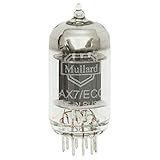
2. Mullard 12AX7 – Best for Retuning an Existing Preamp Stage
This is a single vacuum tube, not an amplifier, and it belongs in this roundup because tube rolling is the cheapest real upgrade in the hobby. If you already own a preamp, integrated amp or phono stage that uses a 12AX7/ECC83 in its gain position, swapping that one tube changes the voicing more audibly than most cable or DAC upgrades. The 12AX7 is the highest-gain of the common small-signal dual triodes, with a mu around 100, which is why it dominates phono stages and line preamps. Mullard’s new-production version is the modern reissue of a classic British name, and it is sold here as a single unit.
Who it suits: the owner of a 12AX7-based preamp who finds the stock tube glassy or forward and wants a smoother top end, and the tinkerer who wants to hear what the gain stage is doing before spending on a new amplifier. It also suits anyone buying a spare, because small-signal tubes do eventually go noisy or microphonic, and having a known-good replacement on the shelf removes a whole class of troubleshooting guesswork.
Key specs as listed
- 12AX7 / ECC83 dual triode, single tube
- 9-pin noval base
- High-mu gain stage (mu ≈ 100 class)
- Common 6.3 V / 12.6 V heater configuration for this tube type
- New-production Mullard branded tube
The strength is leverage per dollar: a single small-signal tube can shift perceived warmth, treble texture and noise floor in a preamp, and it costs a fraction of a new component. The catch is compatibility and quantity. A stereo preamp with two 12AX7 positions needs two tubes, and a phono stage may use three. You also cannot substitute a 12AX7 into a socket wired for a 12AU7, 6922 or 6J1P — those are different tubes with different gain and pinout behavior, and forcing the wrong one in is a good way to damage a preamp. Buy the exact type your manual specifies.
Pros
- Very low cost way to change the tonal balance of an existing preamp
- Classic high-gain dual triode with broad availability across brands
- Useful as a spare to isolate noise or microphonics problems
- New production means no NOS lottery and consistent supply
Cons
- Sold singly — many preamps need a matched pair or trio
- Not interchangeable with 12AU7, 6922 or pentode preamp tubes
- Tube-to-tube variation means a single unit’s character is not guaranteed to repeat
The nearest alternative in this list is the Minhe 6J1P EV preamp module pair. Both are budget ways to introduce tube gain, but they solve different problems: the Mullard replaces a tube in a circuit you already own, while the Minhe modules let you build a tube stage into a project that has no socket at all. If you want a finished product with tubes already installed, the Fosi Audio GR70 or the MICNAUX 5654W unit is a better starting point than a bare tube.
3. Fosi Audio P3 – Best for a Desktop Preamp With Headphone Output

The P3 is a tube preamp and headphone amplifier in a mini chassis with Bluetooth, aimed squarely at the desk. Its job is not to drive speakers directly but to sit between your sources and your existing power amp or powered monitors, adding a tube gain stage, a volume control and a headphone output in one small box. That makes it the natural choice for someone running active desktop speakers who wants tube flavor without replacing the speakers, and who also wants a headphone jack that sounds warmer than a motherboard output.
Who it suits: PC and console users with active speakers or a separate power amp; anyone who wants Bluetooth streaming at the desk without a separate receiver; and headphone listeners who want a tube stage but do not need the higher-end transformer-coupled designs. It is a mid-range product, so it competes on flexibility rather than on exotic parts — expect standard small-signal tubes and a compact switching-friendly layout rather than point-to-point wiring and boutique capacitors.
Key specs as listed
- Vacuum tube preamplifier with headphone amplifier output
- Bluetooth wireless input
- Mini chassis designed for desktop use
- Line-level output to feed a power amp or powered speakers
- Volume control on the preamp stage
The strength here is the combination: preamp, headphone amp and Bluetooth in one footprint that fits under a monitor. A tube preamp in front of a solid-state power amp is one of the most efficient ways to get warmth, because you keep the solid-state amp’s damping factor and current delivery while the tube stage shapes the harmonic profile. The headphone output is a genuine convenience, though on a preamp of this class the headphone stage is usually a simpler circuit than a dedicated amp’s, so very demanding planar headphones will not be driven to their best.
For gaming, the important detail is the signal path. Bluetooth is fine for music but adds codec-dependent latency — typically in the 150–250 ms range for SBC and around 60–100 ms for aptX-class codecs, varying by transmitter and receiver — which is audible in competitive play. Use the wired path for anything latency-sensitive and keep Bluetooth for background listening. The tube stage itself adds no meaningful latency; it is an analog gain stage.
Pros
- Preamp, headphone amp and Bluetooth in one compact box
- Adds tube character while preserving your existing power amp’s grip
- Line output makes it easy to upgrade the power amp later without replacing the preamp
- Small enough for a crowded desk under a monitor
Cons
- Cannot drive passive speakers directly — needs a power amp or active speakers
- Headphone stage is less capable than a dedicated tube headphone amplifier
- Bluetooth introduces latency unsuitable for competitive gaming
Against the Douk Audio P6 MINI, the P3 trades tone controls for a headphone output. If you want to shape bass and treble at the desk, the P6’s tone control section is the more useful tool; if you want to plug in headphones without adding another box, the P3 wins. Against the AIYIMA T20, the P3 is simpler and single-ended, while the T20 adds a fully balanced XLR path for longer cable runs and lower noise pickup.
4. MICNAUX 5654W Tube Amplifier – Best for Cheap Tube Tone on a Desk

The MICNAUX unit is the budget end of the real-tube spectrum: a mini HiFi stereo amplifier and preamp built around 5654W vacuum tubes, with a volume control and a three-band EQ. The 5654W is a small pentode widely used in compact preamp stages, and its presence here means the tube is genuinely in the signal path rather than being a decorative glow behind a solid-state board. For someone who has never owned a tube product, this is the lowest-risk way to find out whether the sound suits them.
Who it suits: nearfield desktop listeners with efficient small speakers or powered speakers; someone assembling a first hi-fi setup on a tight budget; and tinkerers who want a tube stage they can experiment with before committing to a larger amplifier. It is not the right choice for a large room, low-sensitivity floorstanders or anyone who needs substantial power.
Key specs as listed
- 5654W vacuum tube preamp stage
- HD stereo mini HiFi power amplifier
- Volume control
- Three-band EQ (bass, midrange, treble)
- Compact desktop form factor
The three-band EQ is the standout feature at this price, because it lets you compensate for the frequency-response shifts that a high-output-impedance tube stage can produce with speakers whose impedance curve is not flat. In plain terms: if the tube stage makes your speakers sound a little soft in the bass, a small bass boost fixes it in the analog domain, before the amp, with no digital processing. That is a genuinely useful pairing that most budget tube products omit.
The limitations are the usual budget ones. Power is modest, so efficiency matters; the chassis and switching supply are built to a price; and small pentode tubes in a compact, warm chassis can be more prone to microphonic noise than a larger enclosure with more airflow and vibration isolation. Keep it away from the PC’s power supply and off the top of a subwoofer. If you hear ringing or a metallic shimmer when you tap the desk, that is microphonics, and a foam or rubber isolation pad under the chassis usually helps.
Pros
- Real tube stage at the lowest realistic price point
- Three-band EQ lets you correct tonal shifts without digital processing
- Small footprint suits a desk beside a monitor
- Simple controls — no app, no firmware, no menu diving
Cons
- Low power output limits it to efficient speakers and nearfield listening
- Budget chassis and power supply can raise the noise floor
- Compact warm-running enclosure makes microphonics more likely
Compared with the Fosi Audio GR70, the MICNAUX is a quarter of the ambition at a fraction of the price: the GR70 uses four tubes in a headphone-focused design with a proper preamp output, while the MICNAUX is a desk amp first. Compared with the Minhe 6J1P modules, the MICNAUX gives you a finished, cased product with controls, where the Minhe route assumes you are comfortable wiring a module into your own chassis and power supply.
5. Fosi Audio GR70 – Best for Headphone-First Listening at a Desk

The GR70 is a tube headphone amplifier and preamp built around four tubes — two 5654W and two 6AC7 — in a mini HiFi chassis. That tube count is the point: a two-tube design usually means one gain stage per channel, while a four-tube complement in a product like this typically indicates a more elaborate stage structure, which generally means more gain flexibility and a slightly richer harmonic profile than a single-stage design. For a desk-based headphone listener who also wants a preamp output for powered speakers, it is the most complete mid-to-premium package in this list.
Who it suits: headphone listeners who want tube character without a full-size amplifier; users with a mix of high-impedance dynamic headphones and moderately demanding planars; and anyone who wants the tube stage to feed both headphones and a pair of active speakers from the same volume control. It is a premium-tier product, so it competes on tube count, build and output flexibility rather than on price.
Key specs as listed
- Two 5654W vacuum tubes
- Two 6AC7 vacuum tubes
- Tube headphone amplifier output
- Preamp output for active speakers or a power amplifier
- Mini HiFi chassis with front-panel volume control
The practical strength is that the GR70 can be the center of a desktop system rather than an accessory. Plug headphones in for late-night listening, switch to the preamp output for speakers during the day, and the tube voicing stays consistent across both. The four-tube complement also gives you more rolling options than a two-tube design, though you should confirm the exact tube types your unit ships with before buying replacements, since 6AC7 and 5654W are not interchangeable with each other or with the 12AX7 family.
On matching, the usual rule applies: for the flattest frequency response, headphone impedance should be at least about eight times the amplifier’s output impedance. Many tube headphone amps present a higher output impedance than solid-state designs — sometimes tens of ohms — which means 250–300 Ω dynamic headphones are usually a better match than 32 Ω low-impedance planars, whose impedance curve can interact with the amp and shift the bass response. That interaction is not a defect; it is the reason tube amps sound “warm” with some headphones and bloated with others.
Pros
- Four-tube design gives more gain flexibility and rolling options than two-tube rivals
- Headphone and preamp outputs share one volume control for a tidy desk
- Compact enough to sit under a monitor without dominating the space
- Strong match for high-impedance dynamic headphones
Cons
- Premium-tier pricing puts it well above budget tube preamps
- Higher output impedance is not ideal for very low-impedance planars
- Four tubes means four replacement costs when the time comes
Against the Douk Audio U10, the GR70 is the more serious amplifier: the U10 is a mid-range tube headphone amp bundled with matched GE JAN 5654W tubes, which is attractive if you value arriving with known-good tubes, but it offers less gain structure. Against the Woo Audio WA6 2nd gen, the GR70 is the desk-friendly compromise — the WA6 is a dedicated Class A, transformer-coupled design that will outclass it on drive capability and refinement at a significantly higher price.
6. Minhe 6J1P EV Preamp Modules (Two Units) – Best for DIY Builders Adding a Tube Stage

This is two 6J1P-EV vacuum tube preamplifier modules sold as a pair, and it is aimed at a very specific reader: the person building or modifying equipment who wants to insert a real tube gain stage into an existing chassis. The 6J1P-EV is a small pentode, a ruggedized variant widely used in compact preamp circuits, and buying two modules at once makes sense because stereo means two channels. There is no case, no power supply and no controls in this listing — that is the buyer’s job.
Who it suits: DIY builders, restorers and hobbyists who are comfortable soldering, sourcing a suitable low-voltage supply, and mounting modules inside a chassis they already own. It also suits someone adding a tube buffer or gain stage ahead of a solid-state amp to soften a harsh digital source. It does not suit anyone who wants to unbox a product and plug in speakers the same afternoon.
Key specs as listed
- Two 6J1P-EV vacuum tube preamplifier modules
- Module/board format — no enclosure included
- Stereo pairing (one module per channel)
- Intended for integration into a user-supplied chassis and power supply
The strength is flexibility and value. A pair of modules costs less than a finished preamp, and because they are bare modules you control the enclosure, shielding, grounding and power supply — all of which matter enormously for noise in a tube circuit. A well-shielded DIY build with a clean supply and short signal runs can genuinely beat a cheap finished product on noise floor, because you are not fighting a cost-reduced switching supply and a cramped case.
The risk is equally real. Tube modules are high-impedance, high-gain devices, which means they pick up hum and radio-frequency interference readily. Ground loops between the module, the chassis and the source are the most common cause of a 60 Hz hum, and the fix is usually a single-point ground rather than multiple chassis connections. Keep the modules physically away from switching power supplies, Wi-Fi antennas and graphics cards — in a gaming PC case this is close to impossible, so external mounting is strongly preferred.
Pros
- Lowest cost per channel of any real tube stage in this list
- You control enclosure, shielding and power supply quality
- 6J1P-EV is a well-known small pentode with broad availability
- Ideal for restoring or hot-rodding existing equipment
Cons
- No case, no power supply, no wiring — requires real DIY skill
- High-gain modules are prone to hum and RF pickup if not shielded carefully
- No warranty path if your build goes wrong
The nearest alternative in this list is the Mullard 12AX7, which is also a component rather than a finished product. The difference is that the Mullard drops into a socket that already exists, while the Minhe modules require you to create the circuit around them. If you want a finished product with tubes and controls, the MICNAUX 5654W unit or the Douk Audio P6 MINI is the right move instead.
7. Douk Audio F5 – Best for Warm Single-Ended Class A Into Efficient Speakers

The F5 is the purist’s pick in this roundup: a pure Class A, single-ended vacuum tube stereo amplifier with RCA inputs, intended for home audio systems. Single-ended Class A is the topology most closely associated with the warm, rich, harmonically dense sound that tube enthusiasts describe, because the output device conducts for the full 360 degrees of the waveform and the distortion that remains is dominated by low-order, even harmonics rather than the higher-order odd harmonics that solid-state designs tend to produce under stress. It is a premium product and it demands the right speakers.
Who it suits: the listener with high-efficiency speakers — think 93 dB/W/m and above, full-range drivers, horns or high-sensitivity floorstanders — in a small to medium room, listening at moderate levels. It also suits anyone building a second, music-only system where input count matters less than tone. It does not suit a home-theater role, a large room, or 85–88 dB bookshelf speakers played loud.
Key specs as listed
- Pure Class A operation
- Single-ended stereo topology
- RCA line-level input
- Speaker-level outputs for passive speakers
- No Bluetooth, no digital inputs, no DSP
The strength is the thing you cannot get from a hybrid: a simple, short signal path with one output device per channel and no crossover distortion, because the device never switches off. The result is a midrange that hangs together and a treble that decays rather than snaps. The trade-off is efficiency and power. Class A single-ended amplifiers are inherently low-power and run hot; a few watts is normal, which is why speaker sensitivity is not a preference here but a requirement.
The output impedance point matters more on a single-ended amp than anywhere else. Low damping factor means the amplifier’s frequency response is partly shaped by the speaker’s impedance curve, so a speaker that dips to 4 Ω in the bass will sound fuller and looser there than one with a flat 8 Ω load. That is the mechanism behind the classic “tube warmth” — it is not magic, it is an interaction. Choose speakers with a benign, high minimum impedance and you get warmth without boom.
Pros
- Genuine single-ended Class A topology — the warmest voicing in this list
- Minimal signal path with no digital section or DSP to add noise
- Runs in Class A at all levels, so it sounds consistent at low volume
- Simple to maintain and straightforward to tube-roll
Cons
- Low output power rules out low-sensitivity speakers and large rooms
- Runs hot and consumes power continuously, even at idle
- RCA-only input and no digital or Bluetooth connectivity
- Requires careful speaker matching to avoid loose bass
Against the Douk Audio ST-01 PRO, the F5 is the opposite philosophy: one is a flexible 200 W hybrid with every input you need, the other is a low-power purist amp that will sound more distinctly like tubes and demand better speakers. If you already own high-efficiency speakers and listen to acoustic, vocal and jazz material at moderate levels, the F5 is the more rewarding choice. If your speakers are ordinary, the ST-01 PRO will simply work where the F5 will not.
8. Douk Audio P6 MINI – Best for Bluetooth Preamp With Tone Controls

The P6 MINI is a small tube preamplifier with Bluetooth and a tone control section, designed to sit between your sources and a power amp or powered speakers. Its distinguishing feature is the tone control: bass and treble adjustment in the analog domain, right at the tube stage. That combination is unusually practical, because it lets you add tube warmth and then correct for the frequency-response shifts that warmth often brings.
Who it suits: desk and shelf systems with powered monitors or a separate power amp; listeners who stream from a phone over Bluetooth; and anyone who wants a tuning knob rather than a fixed voicing. It is mid-range priced, so it competes on features and convenience rather than on exotic components.
Key specs as listed
- Mini vacuum tube preamplifier
- Bluetooth wireless input
- Bass and treble tone controls
- Line-level output to feed a power amplifier or powered speakers
- Compact chassis for desktop or shelf placement
The strength is control. Tube warmth is not universally flattering — with some recordings it softens transients you want to keep, and with some speakers it thickens bass that was already full. A treble cut and a modest bass adjustment can turn a mushy result into a pleasant one, and doing it in the analog domain avoids resampling and digital artifacts. Bluetooth also removes the cable clutter that a desk setup accumulates.
The limitations are the ones that come with any preamp: it cannot drive passive speakers, so you need amplification downstream, and Bluetooth latency makes it a poor choice for competitive gaming audio — the wired path or a different input is the right answer there. Keep the unit away from the PC’s power supply and any large transformers, since a small preamp chassis offers limited shielding against magnetic hum fields.
Pros
- Tone controls let you correct the frequency shifts tube stages can introduce
- Bluetooth input simplifies desktop and shelf systems
- Compact and inexpensive relative to its feature set
- Analog signal path with no digital processing after the tube stage
Cons
- Needs a power amp or active speakers — no speaker outputs
- Bluetooth latency is unsuitable for competitive gaming
- Small chassis limits shielding against hum and interference
Compared with the Fosi Audio P3, the P6 gives up the headphone output and gains tone controls. If you listen on speakers and want to shape the sound, the P6 is the better tool; if you want headphones at the desk without a second box, the P3 is. Compared with the AIYIMA T20, the P6 is single-ended and consumer-focused, while the T20 targets balanced XLR systems where long cable runs and low noise pickup matter.
9. Woo Audio WA6 2nd Gen – Best for Reference Headphone Listening

The WA6 2nd gen is a vacuum tube Class A headphone amplifier from a brand known specifically for headphone amplification, finished in silver. Where the desk-oriented tube headphone amps in this list are built to a compact budget, the WA6 is a full-size, dedicated design with a transformer-coupled output stage and the kind of build quality that justifies a premium tier. It is the pick for someone whose primary listening is headphones and who wants the amplifier to stop being the limiting factor.
Who it suits: headphone listeners with high-quality dynamic headphones in the 250–600 Ω range and moderately demanding planars; anyone building a music-only system around a single pair of headphones; and buyers who value long-term serviceability and a design that has been through multiple generations. It does not suit someone who needs speaker outputs, or a buyer looking for the cheapest route to tube sound.
Key specs as listed
- Vacuum tube Class A headphone amplifier
- Transformer-coupled output stage
- Second-generation design
- Silver finish
- Full-size chassis intended for dedicated headphone listening
The transformer-coupled output is the key technical detail. Rather than driving headphones directly from the tube’s anode, the signal passes through an output transformer that steps the impedance down to something closer to what headphones want. The practical benefit is that the amplifier can present a more appropriate drive impedance to a wider range of loads than a transformerless OTL design, which typically suits only high-impedance dynamic headphones and can sound thin or underpowered with low-impedance planars. Class A operation also means it never crosses into the switching distortion that Class AB designs produce at low levels — useful when you listen quietly.
The trade-offs are heat, size and price. Class A means continuous power draw and a chassis that gets warm; transformers mean weight; and a premium hand-built amplifier means a price several times that of a desk tube amp. What you get in return is drive capability, low noise and a level of refinement that budget tube headphone amps do not reach — particularly in bass control, where cheap tube designs tend to sound soft and this kind of amplifier does not.
Pros
- Transformer-coupled Class A output handles a wider range of headphone impedances
- Premium build quality and long-term serviceability
- Low noise floor relative to budget tube headphone amps
- Second-generation design with a track record behind it
Cons
- Significantly more expensive than any other headphone option here
- Runs warm and draws continuous power in Class A
- No speaker outputs and no digital inputs
- Overkill for inexpensive headphones that will not reveal the difference
Against the Fosi Audio GR70, the WA6 is the more capable amplifier in every technical respect — more drive, better transformer coupling, better build — at a much higher price. The GR70 makes sense if you want tube headphone sound on a desk budget and also need a preamp output. The WA6 makes sense if headphones are your main system and you intend to keep the amplifier through several headphone upgrades.
10. AIYIMA T20 – Best for a Balanced Preamp Feeding a Separate Power Amp
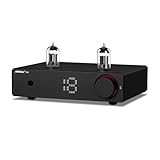
The T20 is a fully balanced vacuum tube preamplifier using ECC83 tubes, with both XLR and RCA connectivity. ECC83 is the European designation for the 12AX7 family — a high-gain dual triode — and a fully balanced implementation means two gain stages per channel working in opposite polarity, which cancels common-mode noise picked up along the cables. For anyone running long interconnects between a preamp and a power amplifier, or feeding a studio-style active monitor setup, that is a meaningful advantage.
Who it suits: owners of a separate power amplifier or active monitors with balanced XLR inputs; listeners in electrically noisy environments where single-ended RCA runs pick up hum; and anyone who wants tube coloration while keeping the drive and damping of a solid-state power stage. It is a premium-tier preamp, so it is not the cheapest way into tubes, but it is the most technically capable preamp in this list.
Key specs as listed
- Fully balanced vacuum tube preamplifier
- ECC83 (12AX7-family) tubes
- XLR balanced inputs and outputs
- RCA single-ended inputs and outputs
- Designed for home audio systems with separate power amplification
The strength is noise rejection and system flexibility. Balanced connections carry the signal on two conductors with opposite polarity and a ground; any interference that couples onto the cable appears equally on both and cancels at the differential input. In a room with dimmers, fluorescent lighting or a gaming PC’s switching supply nearby, that can be the difference between a silent background and an audible buzz. Having both XLR and RCA means the T20 works with professional and consumer gear alike.
The obvious constraint is that a preamp does not amplify speakers. You need a power amp or active monitors downstream, which raises total system cost. And if you have nothing balanced to connect to, you are paying for capability you will not use — in that case a single-ended preamp like the Douk Audio P6 MINI delivers most of the tonal benefit for less.
Pros
- Fully balanced topology rejects cable-borne noise and hum
- XLR and RCA on both input and output sides for maximum compatibility
- ECC83 tubes are widely available and easy to roll
- Lets you keep a solid-state power amp’s grip while adding tube tone
Cons
- Requires a separate power amplifier — no speaker outputs
- Balanced capability is wasted if the rest of your chain is single-ended
- Premium pricing relative to simpler single-ended preamps
Against the Fosi Audio P3, the T20 is the more serious preamp: balanced connections, a higher-grade tube complement and a design focused purely on line-level duty, versus the P3’s convenience features and headphone output. If your system is a PC feeding powered speakers over a short cable, the P3 is enough. If you run XLR interconnects to a power amp across a room, the T20 is the correct tool.
11. Douk Audio U10 – Best for a Headphone Amp That Arrives With Matched Tubes

The U10 is a tube headphone amplifier sold as a bundle with matched GE JAN 5654W vacuum tubes, positioned as a premium upgrade kit. The bundle is the differentiator: instead of receiving whatever generic tubes the factory had on hand, you get a matched pair of a well-regarded 5654W variant. Matched tubes matter most in push-pull circuits, where the two halves of the output stage must be electrically similar to cancel distortion properly, and a matched pair also removes the guesswork about whether channel imbalance is the amp or the tubes.
Who it suits: headphone listeners who want a tube amplifier without immediately shopping for replacement tubes; buyers who value a known tube type over a mystery stock tube; and anyone stepping up from a motherboard headphone output to a dedicated tube stage for the first time. It sits in the mid-range tier, making it a sensible middle ground between the budget desk units and the reference-grade Woo Audio WA6.
Key specs as listed
- Tube headphone amplifier
- Matched GE JAN 5654W vacuum tubes included
- Premium upgrade bundle configuration
- 5654W is a small pentode commonly used in compact preamp and driver stages
The strength is arriving at a known baseline. Tube rolling is fun but it is also a source of uncertainty — you never know whether a perceived